I bought a robot mower this spring after one too many Saturday afternoons pushing a gas mower around a quarter-acre lot in 95-degree heat. Read way too many Reddit threads before pulling the trigger, ended up on the WORX Landroid M WR147. It’s been running all season. This is what actually happened, good and bad.
Quick verdict: It works, but it demands patience up front. Go in expecting a Roomba-for-grass and you’ll be annoyed within a week. Treat it like a gadget that rewards a careful install and it’ll mow your lawn without you thinking about it again.
Check current price on Amazon
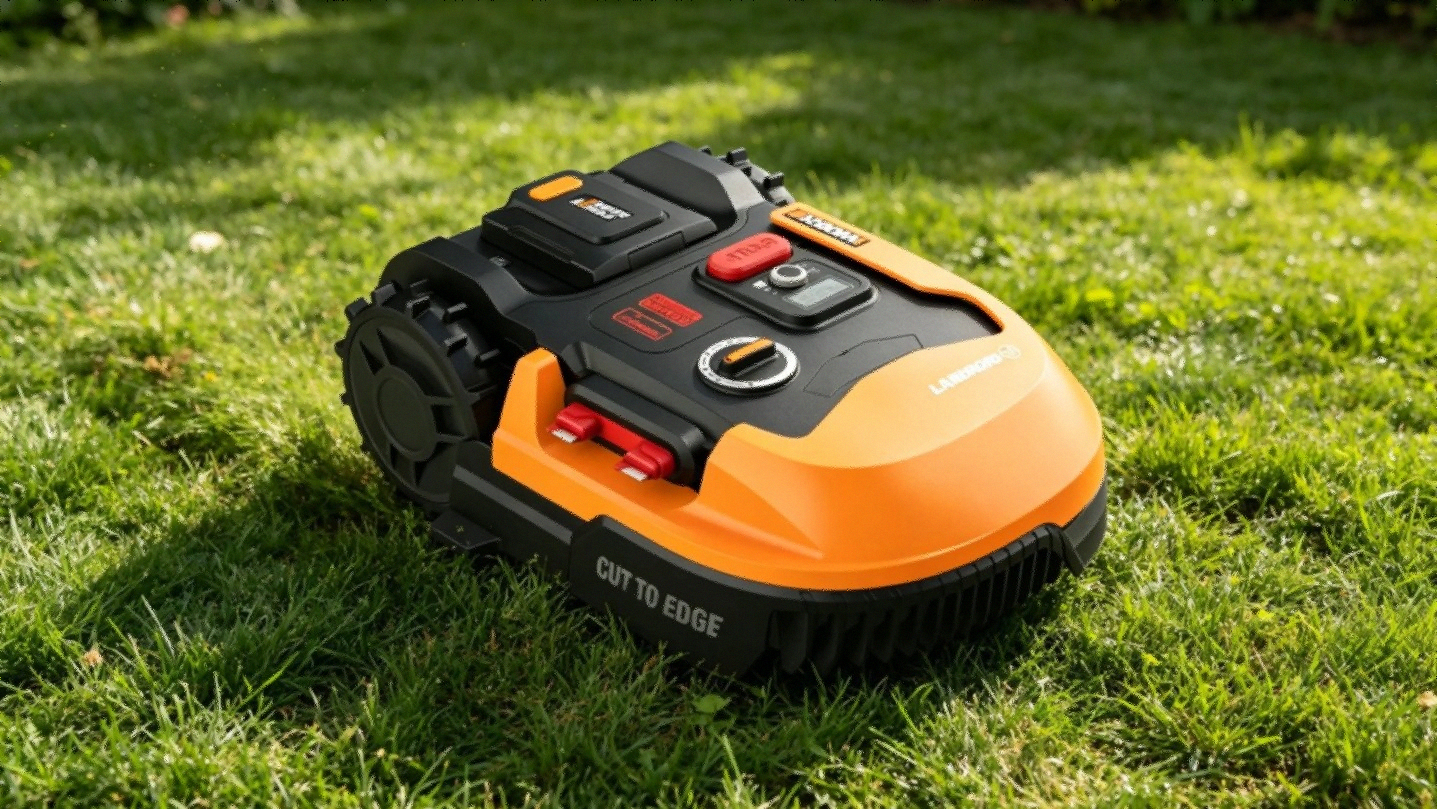
What You’re Actually Buying: WR147 Specs That Matter
Before the experience stuff, the specs — the WR147 sits in a specific spot in the WORX lineup that’s worth understanding first.
| Spec | WR147 |
|---|---|
| Coverage | Up to 1/4 acre (10,890 sq ft) |
| Cutting Width | 7 inches |
| Cutting Height | 1.5” to 3” (5 adjustments) |
| Slope Handling | Up to 20 degrees |
| Power | 20V Power Share battery |
| Navigation | Boundary wire + AIA algorithm |
| App Control | Yes (iOS and Android) |
| Rain Sensor | Yes |
| Price | $599.99 |
The WR147 is the entry point to WORX’s 1/4 acre tier. Below it sits the WR165 (1/8 acre, 4.0Ah), above it the WR155 (1/2 acre, 8-inch cut, 6.0Ah battery). For most suburban lots, the WR147 hits the right coverage without paying for capacity you’ll never use.
One thing people overlook: 20V Power Share compatibility. If you already own WORX tools — string trimmer, blower, drill — the same battery ecosystem works here. That’s not nothing.
Setup: The Part Nobody Warns You About
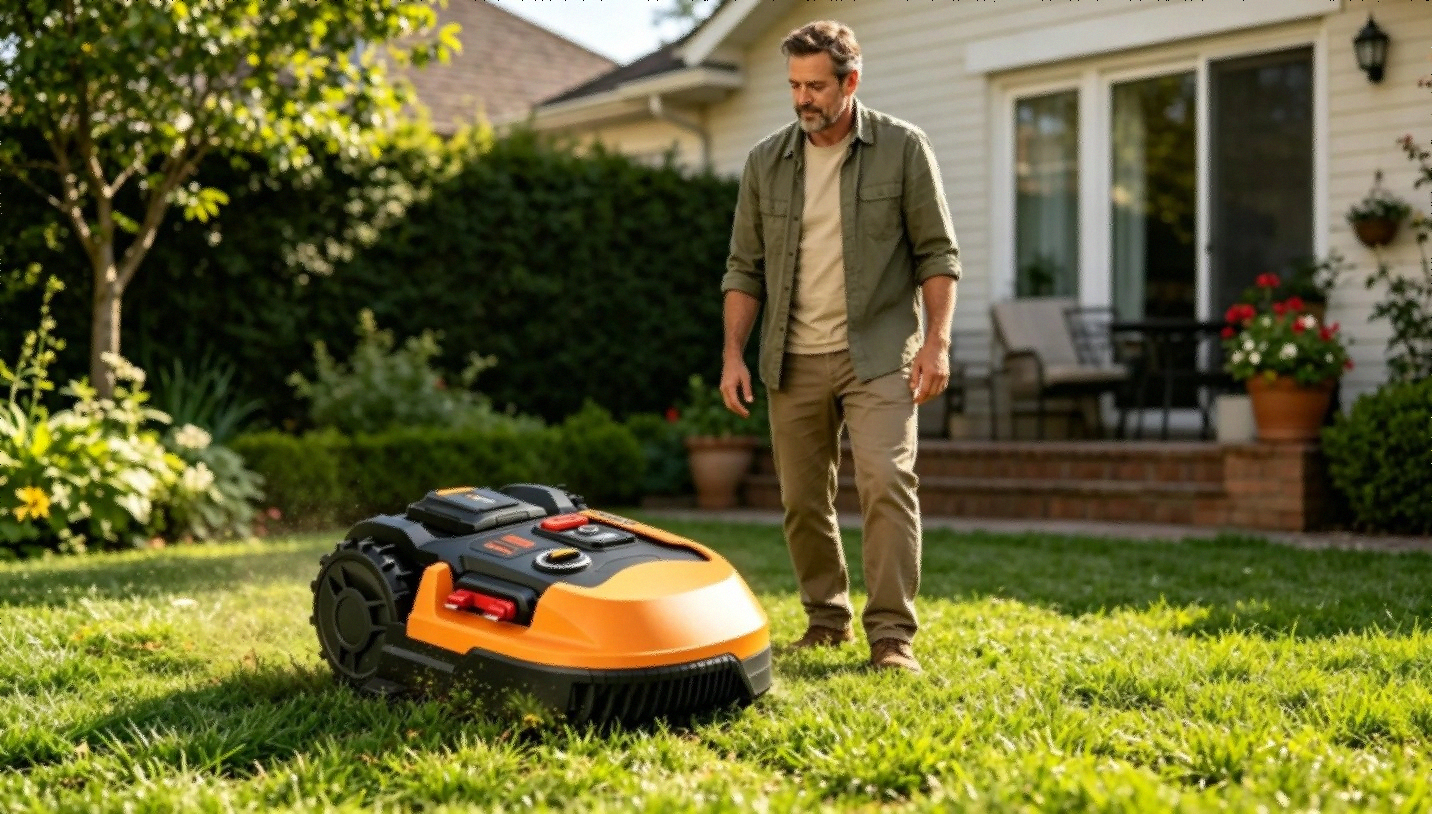
Going to be straight here. The boundary wire installation is the single biggest factor in whether your experience is five stars or one star. I’ve seen plenty of people trash this mower when what they really mean is “I rushed the wire install.”
What You’re Dealing With
The WR147 uses a perimeter wire system. You stake wire around the edge of your mowing zone, connect it to the charging base, and the Landroid uses it to know where to stop and how to find its way home. No wire, no function. Not optional.
The kit comes with wire and stakes — technically enough for a basic rectangular yard, but if you’ve got flower beds, trees, garden borders, or anything irregular, you’ll need more. Order extra before you start. The knockoff stakes and wire on Amazon work fine — no reason to pay WORX prices for consumables.
The Wire Rules That Actually Matter
After reading through every complaint review I could find, the pattern is obvious. Most failures trace back to one rule: keep the boundary wire at least 10-11 inches from any obstacle, edge, or border.
The Landroid doesn’t bump into the wire and stop like you’d picture. It detects it magnetically and centers on it to navigate home. Wire too close to a wall, fence, or raised bed, and the mower simply doesn’t have room to maneuver. Gets stuck. Every time.
First installation took me about four hours. Adjusted it twice in the first week. After that, nothing. Three months in, my lawn looks better than it did when I was paying a service to mow it.
App Setup
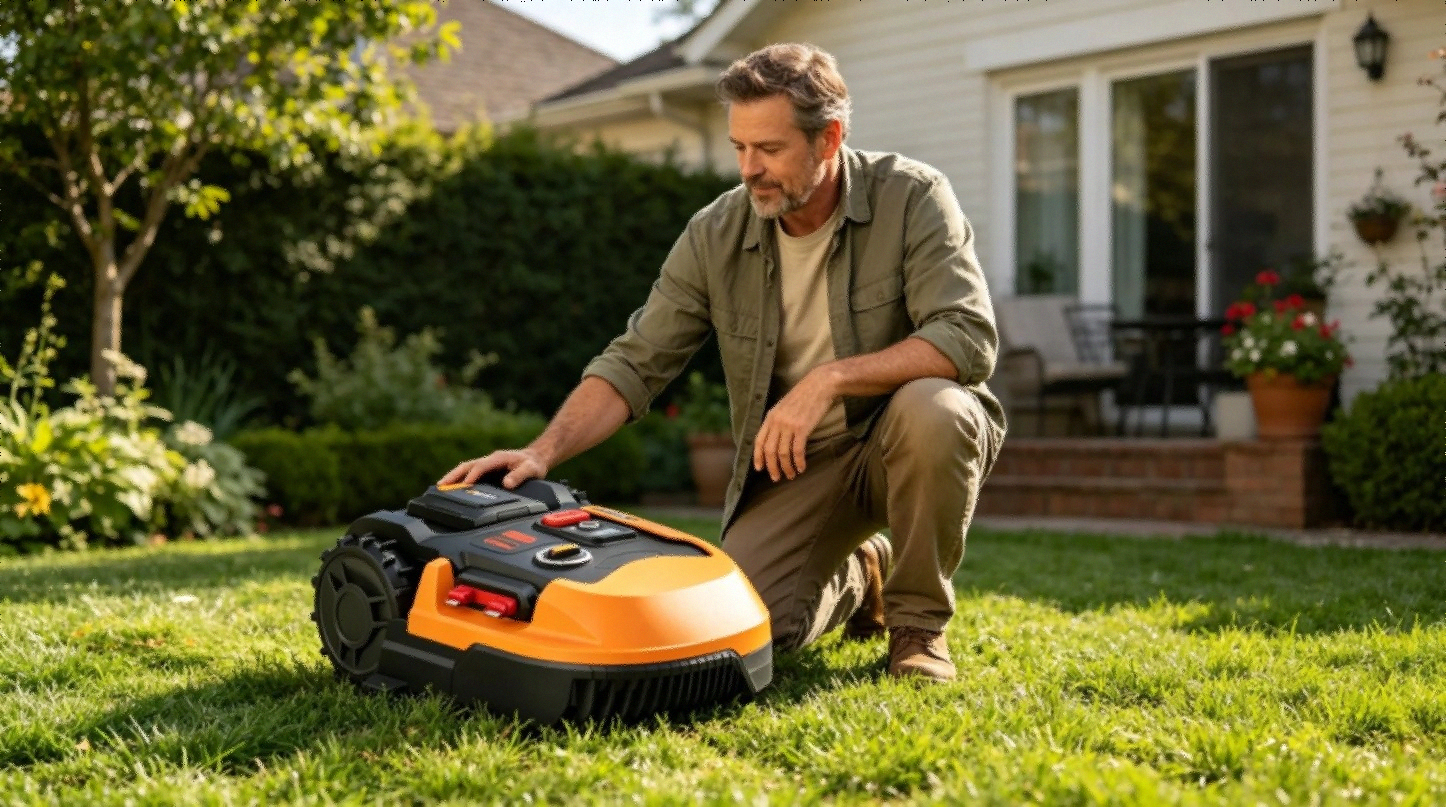
The WORX Landroid app is surprisingly decent. You measure your lawn in the app, it spits out a recommended mowing schedule. Start, stop, monitor — all from your phone. Needs at least Android 7, though some mapping features seem to want something newer. Just use a reasonably modern phone and you’re fine.
Wi-Fi is required for remote control. Without it, the mower still runs on whatever schedule you last set — you just lose the ability to start or stop it remotely. If your router doesn’t reach the backyard, WORX sells a Radio Link Wi-Fi extender as an add-on.
How the AIA Navigation System Works
The WR147 doesn’t mow in neat rows like a person would. It runs WORX’s AIA (Artificial Intelligence Algorithm), which looks random but is actually built to cover the whole lawn over time through repeated passes.
This trips people up. Run it once and you’ll swear it missed half the yard. Give it time. The randomness is intentional — it stops wear patterns from forming in the grass and ensures full coverage across multiple cycles. By design it mows more often than a regular mower would, taking small bites each session instead of one long weekly cut.
It also handles narrow passages — the gap between a fence and a garden bed, or between two trees — better than most robotic mowers at this price. The offset 7-inch blade disc cuts closer to edges than competitors’ centered designs, which means less trimming by hand afterward.
Real Performance: What It Handles Well and What It Doesn’t
Where the WR147 Excels
Standard suburban grass on a relatively flat lot. Its sweet spot. Fescue, Bermuda, St. Augustine, centipede — runs fine on all of them. Set the schedule, forget about it. For flat, clean yards, that’s exactly what happens.
Obstacle avoidance. The AIA approach means it bumps into things and backs off rather than getting hopelessly wedged. Trees, garden stakes, a stray toy in the yard — minor interruption, nothing more. It bumps first and backs away after contact, so it’s not elegant, but it works.
Quiet operation. Huge if you’ve got neighbors close by. This thing is genuinely quiet — you can hold a normal conversation standing next to it. Not a gas mower. Run it early morning or evening without anyone noticing.
Rain behavior. The rain sensor works. Rain hits, Landroid heads to base and waits it out. Smart enough not to cut wet grass, which is better for the lawn and keeps it from tracking mud everywhere.
Long-term economics. One verified Amazon buyer tracked the math — close to $100/month for a lawn service versus $650 for the Landroid. Paid for itself in under 7 months. Tracks for most people paying for service in suburban areas.
Where It Struggles
Slopes over about 15 degrees. WORX claims 20 degrees, and under ideal conditions that’s probably accurate. But add wet grass or soft soil to any real slope and the traction limits show up fast. Several reviewers with muddy or waterlogged spots report the mower getting stuck there.
Sweet gum balls, acorns, large debris. A real limitation. Those spiky brown sweet gum balls jam between the blade and blade guard. If your yard has trees dropping that kind of debris, you’re clearing the area before runs or dealing with occasional stoppages. Small twigs cause the same problem.
Grass over about 3 inches. The WR147 is built to cut often and keep grass short, not to recover from neglect. Let it get past 3 inches and it struggles — slow progress, repeated passes, more getting stuck. It maintains a lawn well. Reclaiming one is a different story.
Complex multi-zone yards. If front and back yards are fully separated by a house or fence with no wire-connected path between them, you’re either running separate base stations or accepting that the Landroid covers one zone per install.
Comparing WR147 to the Robot Mower Alternatives
If you’re seriously shopping this category, you’re probably also eyeing the wire-free options that have gotten a lot of attention lately. Here’s the honest comparison.
WR147 vs Segway Navimow i110N ($1,099)
The Navimow runs RTK+Vision navigation — no boundary wire at all. A real advantage for setup simplicity. But you’re paying nearly double, and the tech, impressive as it is, is newer and comes with its own quirks around GPS coverage and shaded areas.
For budget-conscious buyers with straightforward yards, the WR147 is a proven system at a much lower cost. For people who hate the idea of laying wire, or who have genuinely complex layouts, the wire-free premium might be worth paying. We cover the navigation differences in more depth in our full comparison of RTK vs LiDAR robot mowers.
WR147 vs ECOVACS Goat O1000 ($699)
The Goat O1000 runs $699 — a hundred more than the Landroid — with RTK and Vision navigation, wire-free. Amazon lists it at $699 regularly with occasional promotional dips. For that $100 premium you get no-wire setup. Worth it if that’s what matters to you. ECOVACS WINBOT W2S Omni
WR147 vs Segway Navimow X430
The X430 steps up into larger coverage territory with more advanced navigation. We’ve gone deep on it in our Segway X430 review — but for a quarter-acre lot, you’d be paying for coverage and features you don’t need.
WR147’s Honest Advantage
Price. $599 with battery and charger included, proven reliability within its coverage range, WORX Power Share compatibility, and a product line that’s been mature for years with a deep well of community knowledge. When you’re troubleshooting at 9pm because Landroid is stuck somewhere in the yard, that knowledge matters more than spec sheets do.
The WORX Landroid Accessory Ecosystem
The base WR147 works fine on its own, but WORX has built out an accessory line worth knowing about.
Anti-Collision System (ACS): Adds ultrasonic sensing that detects obstacles 5 inches high and 8 inches ahead, letting the mower veer around them before contact instead of bumping first. Worth it if your lawn has a lot of in-ground obstacles. Sold separately.
Find My Landroid GPS: Anti-theft device using cellular data. If the mower leaves its designated area, you get an alert and can track it. Worth considering if Landroid sits unattended in an accessible yard.
Radio Link: A Wi-Fi extender built specifically to push your router’s signal into the yard. If your router’s on the far side of the house, this fixes connectivity cleanly.
Landroid Garage: A shelter for the charging station. Protects against heavy rain and UV damage over time. Not essential, but it extends the equipment’s life in harsh climates.
Off Limits Strips: Magnetic strips you lay on the ground to create no-mow zones without extra wire. Useful for temporary obstacles — seasonal planters, areas you’re reseeding.
WORX Landroid WR147 vs WR155 vs WR165: Which One to Get?
Since the WR147 sits in the middle of WORX’s core lineup, here’s when to step up or down.
WR165 (1/8 acre, $less): If your actual mowing area is well under 5,000 square feet, the WR165 covers it. Smaller battery, one fewer front swivel wheel, but plenty for smaller lots. A handful of WR147 owners admit they could’ve saved money going with the WR165 for their actual lot size.
WR147 (1/4 acre, $599): The sweet spot for most suburban lots. 4.0Ah battery, two swivel wheels for better maneuverability, reliable coverage up to roughly 10,000 square feet.
WR155 (1/2 acre, higher price): Bigger cutting disc (8”), 6.0Ah battery, built for half-acre properties. If you’re genuinely working a large lot, step up — the WR147 will struggle to keep pace on a true half-acre even if it could technically cover the ground given enough sessions.
Frequently Asked Questions About the WR147
Does the WR147 need Wi-Fi to work?
No. Wi-Fi powers app features like remote start/stop and software updates. Without it, the mower runs on whatever schedule you last set. Core mowing functions stay fully local.
Can the Landroid mow in the rain?
The body is rain-resistant — it won’t die if caught in light rain — but the rain sensor detects precipitation and sends it back to base to wait out dry conditions. WORX got this one right: mowing wet grass is bad for the lawn and the machine.
How often does it need to mow?
Unlike a traditional mower you run weekly, the Landroid works best on a frequent schedule — daily or every other day, cutting a little each time. The app recommends a schedule based on your lawn size. This high-frequency, low-cut approach actually produces a healthier lawn over time.
What happens if it gets stolen?
The optional Find My Landroid GPS add-on is the answer here. The mower requires a PIN on startup, which discourages casual theft, but a determined thief is a different problem. The GPS accessory adds cellular tracking on top.
Is the battery interchangeable with other WORX tools?
Yes — that’s the Power Share system. The 20V battery works across WORX’s 20V and 40V tool lineup. If you’ve already got WORX string trimmers, blowers, or power tools, the same battery packs slot into the Landroid. A real upside if you’re already in the ecosystem.
Final Verdict: Who Should Buy the WORX Landroid M WR147
Buy it if:
- You have a relatively flat lot under 10,000 sq ft
- You’re willing to spend 2-4 hours on a careful wire installation
- You want to eliminate mowing from your life permanently
- You’re already in the WORX Power Share ecosystem
- You’re paying $80-100/month for lawn service (ROI is under a year)
Skip it if:
- Your yard has slopes regularly exceeding 15 degrees
- You have heavy tree debris (sweet gum balls, acorns) everywhere
- You want wire-free navigation and have the budget for RTK options
- You’re expecting it to recover a neglected, overgrown lawn
The WR147 isn’t the flashiest piece of tech in the robot mower market — the RTK systems from Segway and ECOVACS are genuinely more advanced. But it’s proven, affordable, and for the right yard it does exactly what it says on the box. Nearly every negative review out there traces back to installation, and that part’s avoidable if you go in knowing what you’re doing.
If you want to weigh the wire-free alternatives before deciding, our 2026 robot lawn mower buying guide covers the full market.
Buy the WORX Landroid M WR147 on Amazon - $599.99
Disclosure: This article contains Amazon affiliate links. If you purchase through these links, I may earn a small commission at no extra cost to you. This doesn’t influence my recommendations — I only write about products I’ve actually researched or used.