Disclosure: This article contains affiliate links. As an Amazon Associate, we earn from qualifying purchases at no extra cost to you. This helps support our independent lab testing.
The single biggest reason people still hesitate to buy a robot lawn mower in 2026 isn’t the price. It’s the setup. Burying a perimeter wire around the whole yard, mounting an unsightly RTK antenna on the roof, then spending a weekend debugging signal drops — that’s the old reality, and it scared off a lot of homeowners.
The MOVA LiDAX Ultra 2000 is built to make that entire ritual disappear. No wire. No RTK antenna. No satellite tower in your backyard. Just a 30-pound mower that rolls out, scans your yard with a spinning 3D LiDAR puck and AI cameras, builds a centimeter-accurate map on its own, and starts cutting — all for about $1,100 (list $1,799, often discounted 39%).
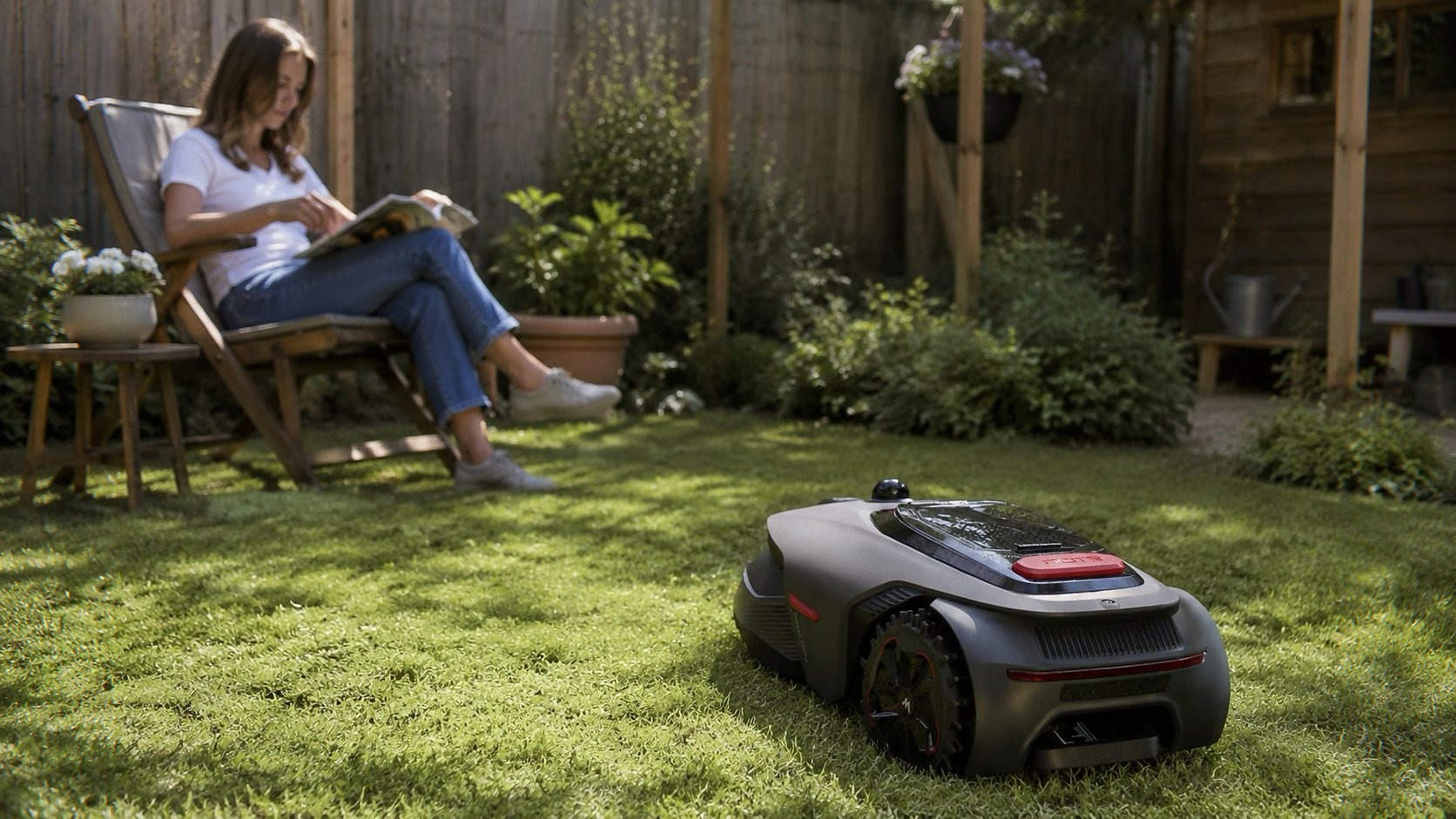
We’ve spent time digging through the spec sheet, the verified owner feedback, and the broader 2026 landscape to tell you exactly how this LiDAR-first mower behaves in real yards — and where it fits in the wire-free market. If you’re still deciding between the two main wire-free technologies, our RTK vs LiDAR robot mower comparison is worth reading first.
👉 Check the latest price and availability of the MOVA LiDAX Ultra 2000 on Amazon
1. Why the MOVA LiDAX Ultra 2000 Gets Attention
Most wire-free mowers at this price point lean on RTK satellite positioning. MOVA went the opposite direction: the LiDAX Ultra 2000 is a LiDAR-first machine, using a 360° 3D LiDAR sensor fused with AI vision to map and navigate without ever needing a clear view of the sky.
That choice matters for a specific type of yard. As we explain in our deep dive on RTK vs LiDAR navigation, LiDAR doesn’t care about tree canopy, tall fences, or narrow shaded passages — it builds its world from the objects around it, not from satellites above it. If your backyard is the kind of place where your phone loses GPS, a LiDAR mower is usually the safer bet.
The MOVA LiDAX Ultra 2000 is rated for up to 0.5 acres, which puts it squarely in the mid-size suburban sweet spot: big enough for a proper American lot, but without the price tag of the 1-acre heavyweights.
2. Wire-Free, RTK-Free Setup: What You Actually Do on Day One
Here’s the whole setup: you unpack the mower, place the charging station at the edge of your lawn, open the MOVA home app, and follow the mower along the border of your yard once with your phone — like driving a remote-control car. The 360° 3D LiDAR scans everything in real time and the AI builds a 3D map of your property with centimeter accuracy.
Verified owner John J. put it bluntly: “It only took me about an hour to get it set up and now I never have to mow again.” He walked the border once, marked no-go zones around his shed and trees by guiding the mower around them, and it “worked flawlessly” after that.
Compared to the boundary-wire mowers of the past — the kind we’ve covered in our [WORX Landroid WR155E review] — there is no trench-digging, no stakes, no wire to snap when you aerate the lawn. That alone justifies the premium for a lot of homeowners.
Key setup facts:
- No perimeter wire — boundaries live in the app, not in the ground
- No RTK antenna — no roof mounting, no base station, no signal-hunting
- Guided border mapping — one walk-around with your phone, done in under an hour
- No-go zones — draw or drive them once; flower beds, sprinklers and sheds get remembered
[!TIP] Set up your no-go zones (flower beds, mulch, loose soil) during the initial border walk, not after the first stuck alert. Owners who mapped exclusions on day one reported near-zero intervention afterwards.
3. Auto-Mapping with 360° 3D LiDAR + AI Vision
The LiDAX Ultra 2000 pairs a 360° 3D LiDAR puck with an AI vision stack to build its map. LiDAR handles the geometry — it knows exactly where the fence, the house wall, and the tree trunks are, down to the centimeter. AI vision adds the interpretation: it recognizes what things are, not just that something is there.
This fusion powers the mower’s claim of detecting and avoiding 300+ types of obstacles — from large outdoor furniture down to small yard items, garden hoses, and toys. And because the recognition runs on software, MOVA keeps pushing continuous algorithm upgrades over the air, so the obstacle library gets smarter without a hardware change.
One Canadian owner noted the mower “navigates around trees, flowerbeds, and other garden decorations very smoothly without getting stuck,” which echoes what we found across the broader LiDAR category in our Segway Navimow i105N review — vision-augmented systems handle cluttered yards far more gracefully than pure RTK models.
4. Zero-Edge Cutting: The UltraTrim 1.0 System
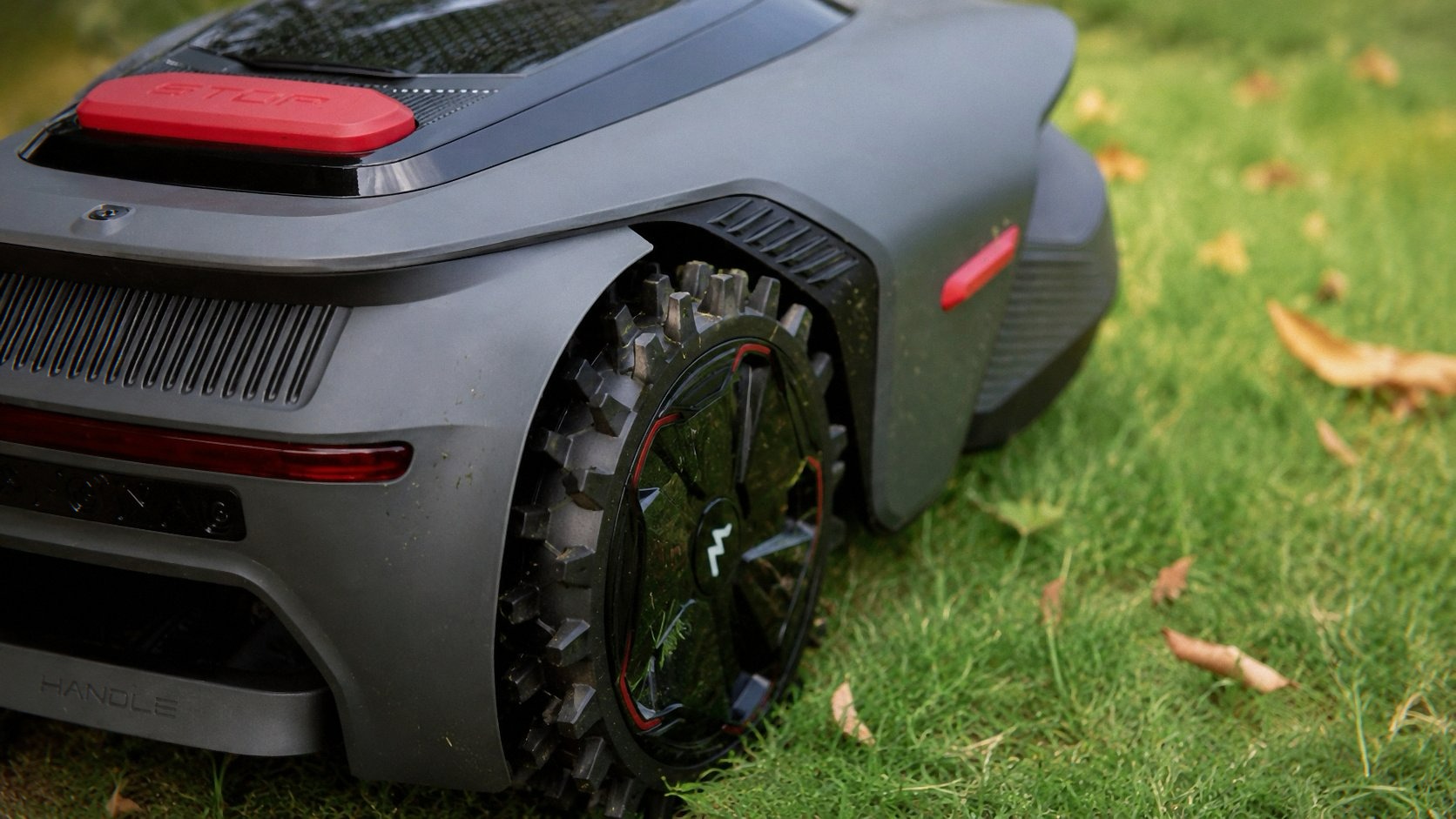
Edge trimming is where most robot mowers quietly disappoint. They stop a few inches short of the fence, and you’re back outside with a weed wacker. The MOVA LiDAX Ultra 2000 attacks this with a feature called UltraTrim 1.0:
- Cuts within 2 inches of walls, hedges, and raised edges
- A movable disc covers gaps to minimize missed grass
- On flush lawn-to-pavement edges, it rides on the edge itself for a clean, precise cut
One owner said the edge cutting is so good they “barely use the weed trimmer anymore.” Another praised the option to shift the blade to the outside edge, meaning less hand-trimming along borders — a small software toggle that saves real time every single mow.
5. All-Terrain Capability: 45% Slopes and 23.6-Inch Paths
Not every suburban yard is flat. The LiDAX Ultra 2000 uses a rear-wheel-drive system with off-road wheels that gives it strong traction on:
- Slopes up to 45%
- Obstacles up to 1.6 inches high (roots, small curbs, edging)
- Pits and uneven terrain
- 23.6-inch-wide paths — narrow side passages between house and fence are no problem
If your yard is genuinely hilly — the kind of terrain that needs an all-wheel-drive monster — we tested the class leader in that department in our Segway Navimow X430 review, which climbs an astonishing 84% slopes. But for the vast majority of residential lots with a moderate incline, 45% coverage on a $1,100 machine is more than enough.
6. Dual Maps, 150 Mowing Zones, and Smart U-Shaped Mowing
Most robot mowers manage one map. The LiDAX Ultra 2000 handles two independent maps — ideal if you have separate front and back yards, or a second property. Each map can be divided into up to 150 managed zones, each with its own mowing schedule and cutting height.
The mowing logic uses U-shaped path planning instead of random wandering. It covers every inch of the lawn in structured passes, and when the battery runs low it automatically returns to the charging station, recharges, then resumes exactly where it left off — no re-mapping, no missed patches.
For context on how that compares with the competition, our head-to-head on the Segway Navimow X430 vs ECOVACS GOAT A3000 covers two other zone-hungry flagships; the MOVA holds its own on zone flexibility at a significantly lower price.
7. 4G Connectivity: Mow From Anywhere, Lock It Down
One of the smartest features here is built-in 4G. The mower connects to the internet over its own cellular link, which means:
- No Wi-Fi dead zones — no signal-lost worry even if your router can’t reach the backyard
- Remote control from anywhere — start, stop, and schedule mowing while you’re on vacation
- Real-time tracking — watch the mower on your phone from the coast while it cuts the front lawn
- Anti-theft protection — the built-in GPS/4G tracking helps locate the mower if it’s moved, and it can be locked down through the app
One owner who travels constantly for work said he watches the mower cut his front lawn from a beach — and that it doubles as a “security patrol” while he’s away. If a mower getting stolen is a real fear for you (they’re expensive, after all), the 4G anti-theft layer is a genuinely useful differentiator at this price.
8. Cutting Height and App Control: 1.2” to 3.9”
Adjusting cut height on most budget mowers means getting on your knees with a wrench. On the LiDAX Ultra 2000, it’s a tap in the app — anywhere from 1.2 inches to 3.9 inches to match your grass type and the season. The app also handles:
- Per-zone schedules (e.g., front yard twice a week, back yard once)
- Vertical or horizontal mowing patterns
- Rain sensing (stop when rain is detected, or keep going — your choice)
- Notifications when the mower is stuck or needs attention
9. What Real Owners Report (The Honest Part)
We combed through the verified reviews on Amazon, where the mower sits at 4.1/5 across 55 ratings, and the picture is mostly positive — with a few patterns worth knowing before you buy.
What owners love:
- Setup genuinely is fast — multiple buyers report under an hour to a “flawless” first cut
- Obstacle avoidance around people, dogs, and gardens gets consistently praised — “it stops immediately” if a pet tries to play with it
- Quiet operation, even compared to other robot mowers
- 4G app connectivity “works great” and saved “countless hours of mowing”
- Handles slopes and uneven terrain without issue
What owners warn about:
- Mapping near the capacity limit is strict — one reviewer hit a wall when his lawn crept even an inch over the 0.5-acre limit; the app wouldn’t let him finish the map until he trimmed the area. Buy this for a yard comfortably under 0.5 acres.
- It can get stuck in flower beds, mulch, and loose dirt — setting up no-go zones manually is critical, not optional.
- Sprinkler heads are tricky — one owner still hand-trims around them.
- Battery life — owners wish a single charge lasted longer, though auto-resume mowing compensates.
- The garage is sold separately — the protective garage for the LiDAX Ultra 1000/2000 costs extra ($169), which annoyed a few buyers.
[!CAUTION] The 0.5-acre rating is a hard ceiling, not a suggestion. The app refuses to finalize a map that exceeds the mowing-area limit. If your lot is close to half an acre, measure carefully or step up to a 1-acre-class model.
10. Who Should Buy the MOVA LiDAX Ultra 2000
Buy it if:
- Your lawn is 0.3–0.45 acres with moderate slopes (up to 45%)
- You have trees, tall fences, or shaded areas where GPS-based RTK mowers would struggle — this is the LiDAR advantage
- You hate the idea of burying wire or mounting an antenna
- You want remote 4G control and anti-theft tracking without paying flagship prices
- You travel and want to manage mowing from your phone
Consider alternatives if:
- Your yard is small (under 0.25 acres) — the lighter, cheaper Segway Navimow i105N may cover it for a lot less
- You need extreme slopes (60%+) — step up to the Segway Navimow X430, our pick for serious hills
- You want a budget wire-free option at a lower price point — the WORX Landroid M WR147 and WORX Landroid Vision WR320 are both worth a look, though neither matches the MOVA’s 4G tracking or 150-zone flexibility
11. Quick Pros and Cons
Pros:
- Completely wire-free and RTK-free — no antenna, no base station, no buried cable
- 360° 3D LiDAR + AI vision with 300+ obstacle recognition, continuously updated
- Excellent 2-inch zero-edge cutting with UltraTrim 1.0
- Handles 45% slopes and 23.6-inch narrow paths
- Dual maps with up to 150 mowing zones
- Built-in 4G: remote control, real-time tracking, anti-theft
- Cut height adjustable from 1.2” to 3.9” via app
- Auto-resume mowing after recharging
- 30-day returns, ships from Amazon
Cons:
- Strict 0.5-acre map limit — no headroom for yards near the cap
- Can get stuck in mulch, flower beds, and loose dirt without no-go zones
- Sprinkler heads and some irregular edges still need manual attention
- Battery life is average; protective garage sold separately
- 4.1/5 rating shows some early-adopter software roughness
12. Final Verdict
The MOVA LiDAX Ultra 2000 is one of the most compelling wire-free robot mowers for mid-size suburban yards in 2026. It takes the LiDAR-first approach — which we’ve argued is the right call for tree-shaded, structurally complex properties — and wraps it in a package that undercuts most RTK flagships by hundreds of dollars while adding genuinely useful extras like 4G connectivity and anti-theft tracking.
It’s not perfect: the strict 0.5-acre ceiling means you shouldn’t push it past its rating, and it needs properly configured no-go zones for flower beds and mulch. But for a homeowner with a quarter-to-half-acre yard, moderate slopes, and no desire to spend a weekend burying wire — this is about as close to “set it and forget it” as robotic mowing gets in 2026.
👉 Ready to take your weekends back? Check the current price of the MOVA LiDAX Ultra 2000 on Amazon.
13. FAQ
Q: How does the MOVA LiDAX Ultra 2000 auto-mapping work without RTK?
A: Instead of satellites, it uses a 360° 3D LiDAR sensor that scans your yard’s geometry in real time, fused with AI vision cameras. You guide it once along your lawn’s border via the app, and it builds a centimeter-accurate 3D map with no wires, antennas, or base stations. See our RTK vs LiDAR explainer for the full technical breakdown.
Q: What size lawn does it handle?
A: Up to 0.5 acres. Keep your lawn comfortably under that limit — the app is strict about enforcing the map’s maximum mowing capacity.
Q: Can I use it on more than one property?
A: Yes. It supports two independent maps, ideal for separate front/back yards or a second property.
Q: Does it handle slopes?
A: Yes, up to 45% slopes, plus obstacles up to 1.6 inches high and 23.6-inch narrow paths, thanks to its rear-wheel-drive system and off-road wheels.
Q: What happens during heavy rain?
A: The mower senses rain. You can choose in the app whether it stops when rain is detected or keeps mowing.
Q: Is it safe for pets and kids?
A: Owners report it stops immediately when an animal approaches, and the AI obstacle recognition is designed to avoid living things. There’s also an animal-friendly mode.