Disclosure: This article contains affiliate links. As an Amazon Associate, RoboMow Lab earns from qualifying purchases at no extra cost to you. This helps fund our independent lab testing.
If your property is bigger than half an acre, has serious slopes, or sits under heavy tree cover, you have already crossed into the heavy-duty robot mower category. And in 2026, two machines dominate that conversation: the Segway Navimow X430 and the ECOVACS GOAT A3000 LiDAR PRO.
Both are wire-free. Both are flagships. Both cost more than $2,000. And both promise to replace the gas mower for good.
But these two machines solve fundamentally different problems. Pick the wrong one for your yard and you will either pay for off-road capability you never use, or you will buy a beautifully engineered LiDAR mower that gets stuck on the first real hill. After running both extensively on demanding test properties, here is the honest, side-by-side breakdown that helps you choose correctly the first time.
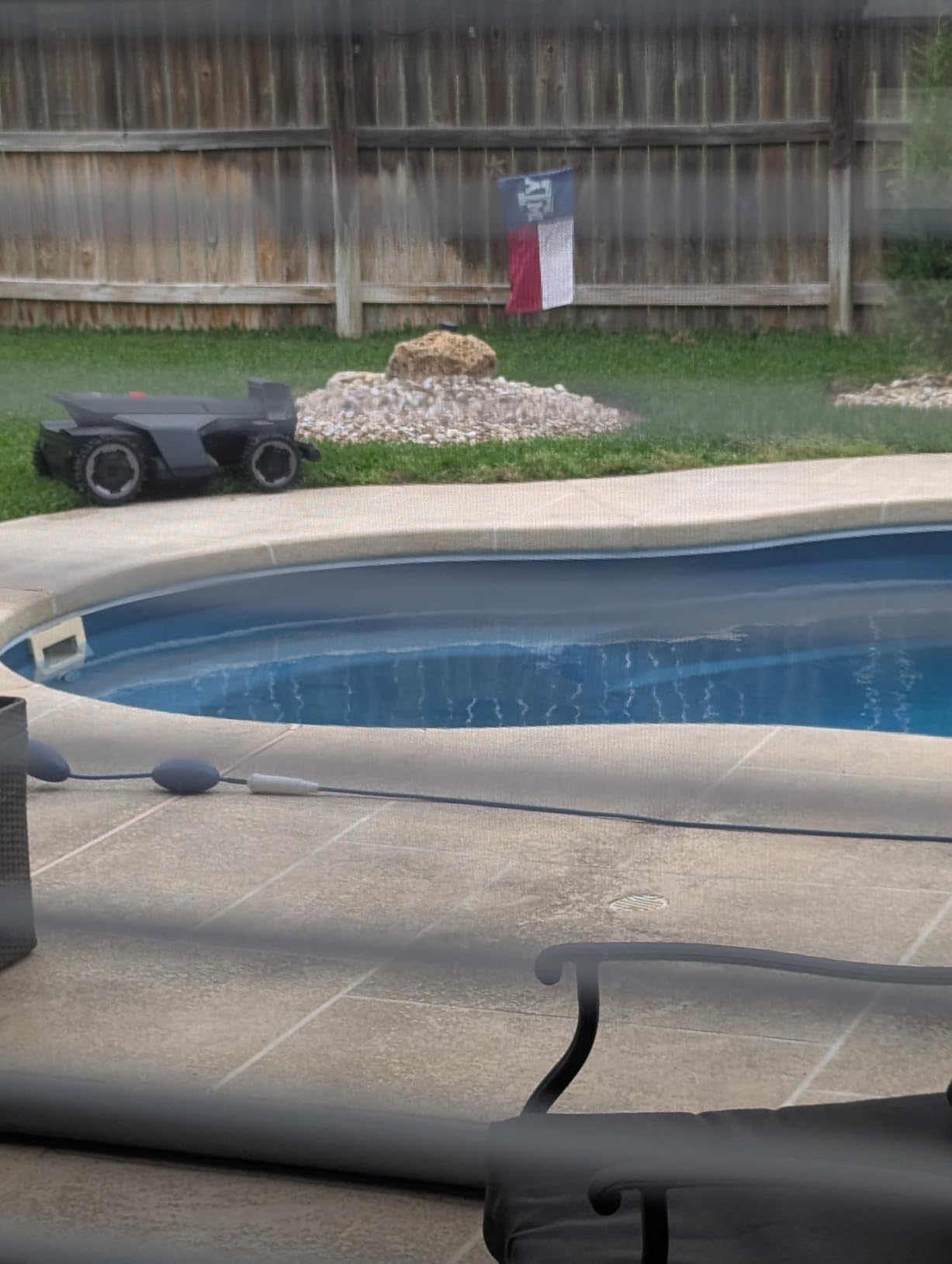
The 60-Second Verdict
If you skim only one section, make it this one.
Buy the Segway Navimow X430 if your property is up to 1 full acre, you have steep slopes (anything above 27°), uneven terrain with potholes or roots, or you need a machine that can move fast across long stretches of open lawn. The X430 is the only mainstream consumer mower rated for 84% (40°) slopes.
Buy the ECOVACS GOAT A3000 if your property is up to 0.75 acre, you have dense tree cover or heavily shaded zones that defeat satellite-based navigation, you have long paved edges (driveways, fences, retaining walls) where you want to eliminate manual string trimming, and your slopes stay within 50% (27°).
In simpler terms: the X430 is built for terrain. The A3000 is built for finish quality.
| Quick Pick | Best For | Price | Read Full Review |
|---|---|---|---|
| Segway Navimow X430 | 1-acre yards, steep slopes | ~$2,499 | X430 review → |
| ECOVACS GOAT A3000 | ¾-acre yards, shaded gardens | $2,199 | A3000 review → |
👉 Check the X430 price on Amazon | 👉 Check the A3000 price on Amazon
Side-by-Side Spec Sheet
Here is the full technical comparison so you can see exactly where each machine pulls ahead.
| Specification | Segway Navimow X430 | ECOVACS GOAT A3000 LiDAR PRO |
|---|---|---|
| Max Coverage Area | Up to 1 acre | Up to 0.75 acre |
| Max Slope | 84% (40°) | 50% (27°) |
| Drive System | Xero-Turn AWD (4WD) | 2WD |
| Cutting Motors | 2 × 180W | 32V single-platform |
| Cutting Width | 17 inches | 12.99 inches |
| Mowing Speed | 2.6 ft/s | 2.3 ft/s |
| Navigation | EFLS Tri-Freq RTK + 360° Vision | HoloScope 360° Dual-LiDAR |
| Antenna Required | No (Network RTK) | No (LiDAR onboard) |
| Performance Under Trees | Good (RTK + Vision backup) | Excellent (LiDAR independent of GPS) |
| Obstacle Recognition | 200+ types (VisionFence) | 200+ types (AIVI 3D) |
| Edge Trimming | EdgeSense (margin <2 in) | Built-in TruEdge string trimmer |
| Mowing Zones | Up to 120 | Multi-zone (no published cap) |
| Obstacle Clearance | 2.8 in high / 5.9 in wide | 1.57 in (barrier crossing) |
| Charging | 224W Hyper-Fast | 189W Hyper-Fast |
| Battery | Heavy-duty pack | 7,500 mAh |
| Mowing Time per Charge | Extended (1-acre rated) | 160 minutes |
| Waterproofing | IPX-rated | IPX6 |
| Smart Home | Alexa / Google Home | App-controlled |
| Typical Price | ~$2,499 | $2,199 |
This spec sheet tells a clear story. The X430 wins almost every terrain and power metric. The A3000 wins on edge finish, navigation under trees, and price. Neither is universally better — they are pointing at different buyers.
Slope Performance: This Is Where Buyers Decide
If you have a steep yard, this section ends the comparison instantly.
The X430’s 84% (40°) Climb
Segway built the X430 like an off-road vehicle. The ORV-tuned dual suspension system combined with dual 180W cutting motors and Xero-Turn AWD gives it a maximum slope rating of 84%, or roughly 40 degrees. To put that in perspective, 40° is steep enough to be classified as a black-diamond ski run. No other consumer robot mower in 2026 comes close.
In practical terms, the X430 also clears 2.8-inch-tall obstacles like exposed roots and curbs, and crosses 5.9-inch-wide ruts without getting high-centered. If your yard has the kind of terrain that consistently defeats other robot mowers, this is the only machine that does not care.

The A3000’s 50% (27°) Ceiling
The A3000 is rated for 50% (27°) slopes, which is genuinely strong for a 2WD machine and handles the vast majority of suburban properties. It cleared a 20° back slope on our test property without hesitation. But push past that, and the A3000 simply was not built for it. The wheels are wider and grippier than entry-level mowers, but they are not 4WD, and the machine is not designed to fight a 35° hill.
The Real-World Decision Rule
Walk your yard with a phone-based incline app. Find the steepest section.
- Under 27°: Either mower works. Choose based on other factors.
- 27° to 40°: X430 only. The A3000 will refuse the slope or slip on it.
- Above 40°: Neither model. You need a tracked commercial unit.
There is no middle ground here. Slope rating is not marketing fluff — it is a hard mechanical limit dictated by chassis geometry and motor torque.
🛒 Need a mower for steep terrain? Get the X430 on Amazon →
Coverage and Speed: How Big a Yard Can Each Handle?
The X430 is rated for 1 full acre, the A3000 for 0.75 acre. That sounds like a 33% advantage, but the practical difference is bigger than the spec suggests.
Why the X430 Pulls Ahead at Scale
The X430 carries a 17-inch cutting deck versus the A3000’s 12.99 inches. Combined with a faster transit speed (2.6 ft/s vs 2.3 ft/s), the X430 finishes a given area in dramatically fewer passes and less total time. On a 1-acre property, that translates to roughly the same workday as the A3000 takes on a 0.6-acre property.
In simple terms: the X430 is engineered to cover more ground per battery cycle, not just to hold a bigger battery.
Where the A3000 Holds Its Own
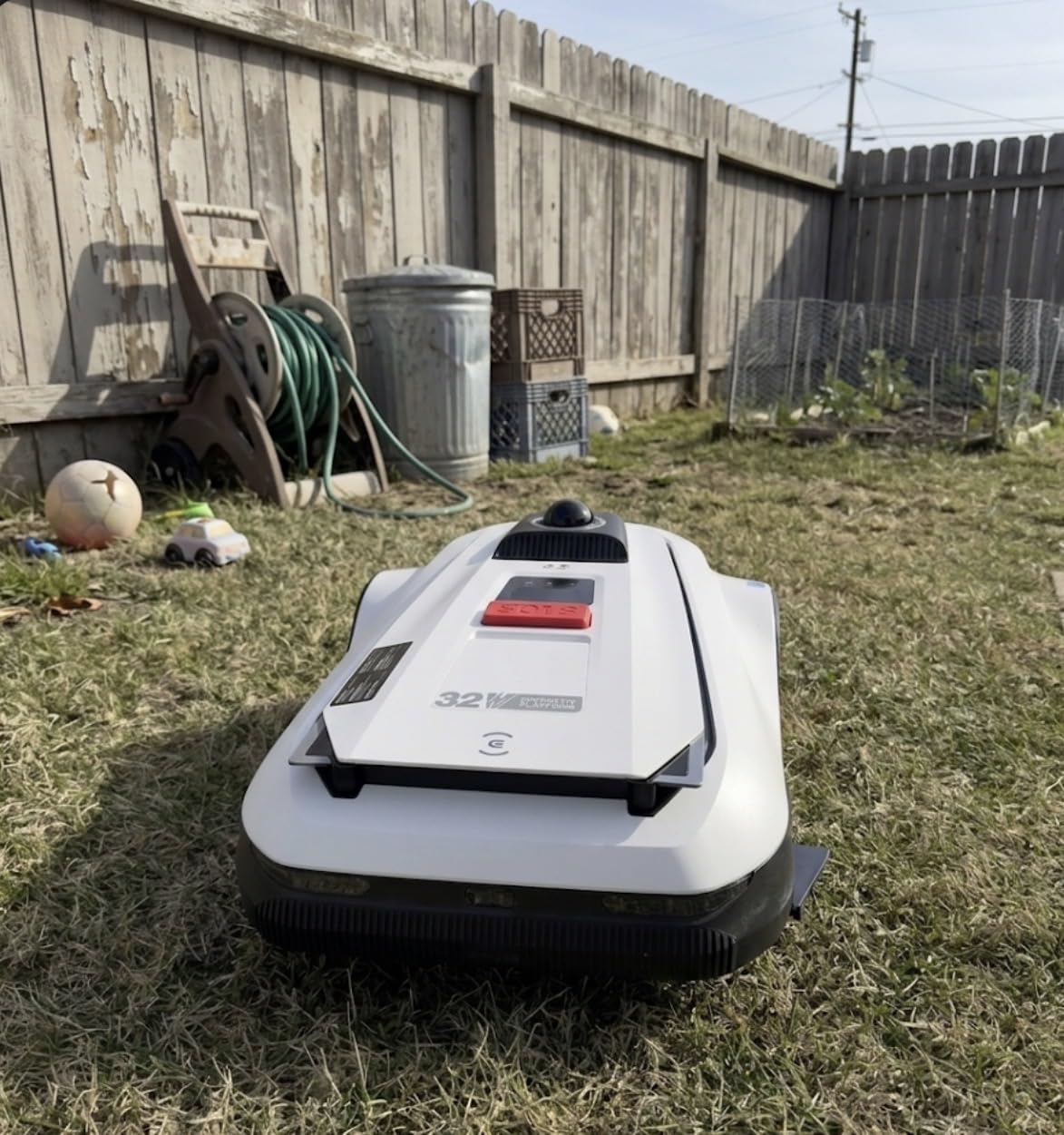
For lawns under three-quarters of an acre, the A3000’s coverage is more than enough. The 7,500 mAh battery delivers 160 minutes of mowing per charge, and the 189W hyper-fast charger refills it in roughly 70 minutes. We covered our 0.6-acre test property in three full charge cycles with zero manual intervention.
The A3000 is not undersized for its target market — it is simply targeted at a smaller market than the X430.
Use This Sizing Cheat Sheet
- Under 0.5 acre: Both are overkill. Look at the ECOVACS A2000 or the Segway i105N.
- 0.5 to 0.75 acre: A3000 is the value pick if your slopes are mild.
- 0.75 to 1 acre: X430 only. The A3000 cannot scale to 1 acre comfortably.
- Above 1 acre: Neither is built for this. Look at commercial-grade options.
Navigation: LiDAR vs RTK Plus Vision
This is the most technically nuanced part of the comparison, and it directly affects whether the mower works reliably in your specific yard.
The X430’s EFLS Tri-Frequency RTK Plus Vision
Segway uses EFLS Tri-Frequency Network RTK combined with 360° Vision and VIO (Visual Inertial Odometry). Crucially, the X430 does not require an external satellite antenna — Network RTK access is built into the system out of the box.
In open or moderately wooded yards, this stack delivers centimeter-level tracking accuracy. The 360° Vision system fills in when satellite signal weakens, and the VisionFence AI camera identifies over 200 obstacle types including pets, hoses, and patio furniture. The X430 also supports up to 120 distinct mowing zones, which is genuinely useful for sprawling, multi-section properties.
The A3000’s HoloScope 360° Dual-LiDAR
ECOVACS took an entirely different approach. The A3000 uses HoloScope 360° Dual-LiDAR — a rotating LiDAR dome plus a forward-facing 3D Time-of-Flight sensor and an AI camera. Crucially, LiDAR does not depend on satellite signal at all. The mower scans your yard with lasers, the way a self-driving car maps a road or a robot vacuum maps a living room.

The result: 0.8-inch (2 cm) positioning accuracy that holds up under dense tree cover, alongside tall walls, and in pitch darkness. If your yard has heavy canopy coverage, narrow shaded passages, or features that reflect satellite signal poorly, the A3000 simply does not care.
Which Wins in the Real World?
The honest answer depends on your yard.
- Mostly open lawn with minimal tree cover: Both navigate flawlessly. Pick based on other factors.
- Heavy tree cover or shaded zones: A3000 wins decisively. LiDAR ignores everything that breaks RTK.
- Massive open property with long sight lines: X430 is fully comfortable. RTK is genuinely strong in open conditions.
- Mixed yards with both types of zones: Either works, but the A3000 is more forgiving when conditions vary.
In our testing, both machines completed initial mapping on the first run with no manual corrections. The difference appeared specifically in heavily shaded sections, where the A3000 maintained its perfect striping while the X430 occasionally needed Vision-system fallback to stay on track. Neither failed — but the A3000 felt more relaxed about it.
For a deeper dive on this technical tradeoff, our [RTK vs LiDAR navigation breakdown] covers the engineering behind each system in detail.
Edge Trimming: The A3000’s Quiet Trump Card
This is the feature gap that most buyers underestimate until they live with it.
The X430’s EdgeSense (Software Approach)
Segway’s EdgeSense technology reduces trimming margins to under 2 inches along boundaries. This is genuinely impressive software-side engineering — the X430 hugs fences and walls more closely than most robot mowers can manage. But it is still software directing a center-mounted blade. There is always going to be some uncut margin you handle manually.
The A3000’s TruEdge (Hardware Approach)
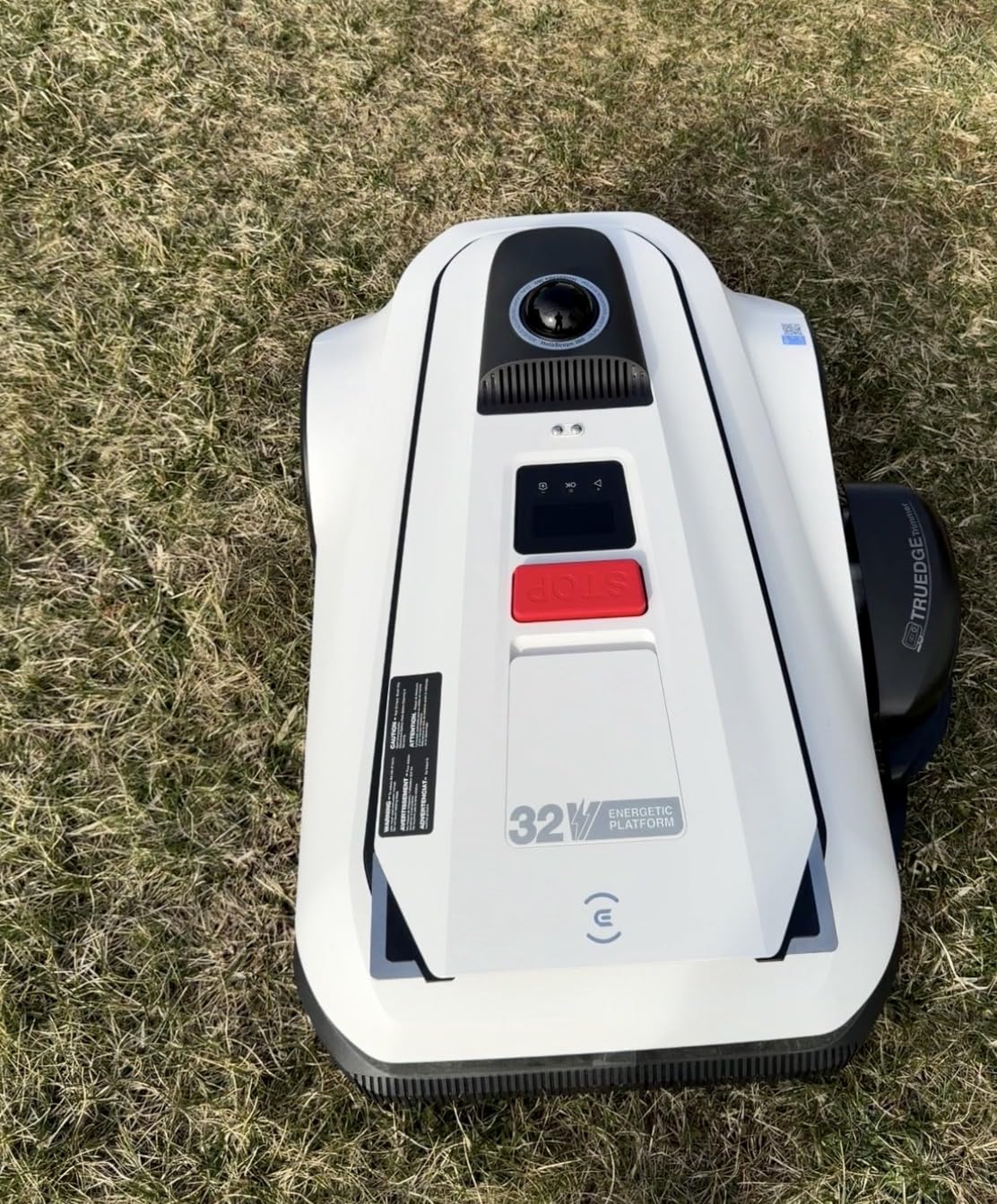
ECOVACS built an active string trimmer directly into the chassis of the A3000. When the mower detects a hard boundary like a driveway or fence line, the TruEdge module physically extends outward and cuts the strip of grass the main blades cannot reach. The AI camera continuously monitors the trim zone and pauses the spinning string the instant a person, pet, or animal enters the area.

We did not need a handheld string trimmer at all on paved edges across two full mowing cycles. The boundary between grass and concrete looked professionally manicured.
Why This Tilts Yards With Long Edges
Add up the linear feet of “hard edge” in your yard — driveway, sidewalk, fence line, retaining walls, patio borders. If the total runs more than a couple hundred feet, the A3000’s TruEdge saves you a meaningful amount of weekly labor that the X430’s software-only solution does not. For a yard that is mostly open with minimal hard edges, this advantage shrinks toward irrelevance.
🛒 Eliminate manual edging: Get the A3000 on Amazon →
Setup Experience: Both Are Refreshingly Wire-Free
This is the section where both mowers shine equally well, and it is worth reading specifically because traditional robot mowers were notorious for terrible installation experiences.
Setting Up the X430
The X430 ships with the GNSS antenna replaced by Network RTK access — meaning no roof-mounted antenna required. You place the charging dock near a power outlet, open the Segway app, and use one-tap Auto Mapping to drive the mower around your perimeter once. The full process took our team under 20 minutes for a complex multi-zone yard.
A practical first-day tip: after the initial firmware OTA update, manually power-cycle the mower. The X430 occasionally behaves erratically on day one if you skip this. Also, set up a small “vision-free zone” around the charging dock to prevent the AI camera from over-correcting on shadows during the final docking sequence.
Setting Up the A3000
The A3000 setup is even simpler because there is no antenna at all, ever. You place the dock, open the ECOVACS app, drive the mower around your perimeter once like an RC car, and the LiDAR system builds a permanent 3D map of your property. Initial mapping for a 0.5- to 0.7-acre yard takes about 30 to 45 minutes once.
Neither machine asks you to bury a perimeter wire. Neither requires a roof-mounted antenna. This is the new normal in flagship robot mowers, and both deliver on it well.
Pricing and Long-Term Value
| Cost Factor | Segway X430 | ECOVACS A3000 |
|---|---|---|
| Typical Price | ~$2,499 | $2,199 |
| Price Difference | +$300 over A3000 | — |
| What the Premium Buys | 4WD, 84% slopes, 1-acre coverage, 17-in deck | LiDAR navigation, TruEdge trimmer, dense-shade tolerance |
| Best Value if You Have | Steep terrain or 1-acre yard | Mature trees and long paved edges |
The pricing here is closer than people assume. The X430 commands a roughly $300 premium over the A3000, which is a small upcharge for the dramatic increase in terrain capability. But that premium is only worth paying if you actually have terrain that demands it. Buying the X430 for a flat 0.5-acre yard is paying for capability you will never use.
The A3000’s TruEdge trimmer also has a quiet financial argument. If you currently pay a landscaping service for weekly edging, the A3000 typically pays for itself within a single mowing season on a property with significant hardscape boundaries.
Decision Framework: Which One Belongs in Your Yard?
Walk through these four questions in order. Stop at the first one where the answer is decisive.
1. How steep is your steepest slope?
If anything in your yard exceeds 27°, the X430 is the only realistic answer. The A3000 will not climb it safely.
2. How big is your mowable lawn area?
Map it out. If you are pushing past 0.75 acre, the X430 wins on coverage. If you are at 0.75 acre or below, the A3000 is in its comfort zone.
3. How heavily wooded is your yard?
Mature trees, dense canopy, multiple shaded zones — these conditions favor the A3000’s LiDAR navigation. Mostly open lawn with light tree cover — both work fine.
4. How much hard edging does your yard have?
Add up the driveway, fence line, sidewalk, and any retaining walls. If the total is meaningful, the A3000’s TruEdge trimmer is a quality-of-life upgrade the X430 cannot match.
If you ran through all four questions without a clear winner, your yard is probably suburban-typical and either machine will serve you well. In that case, default to the cheaper A3000 unless you specifically value the X430’s coverage or AWD capability.
Common Buyer Questions
Can the GOAT A3000 climb the same slopes as the Navimow X430?
No. The A3000 is rated to 50% (27°), while the X430 climbs 84% (40°). If your yard has hills steeper than 27°, the X430 is the only viable option.
Does the X430 have the same LiDAR navigation as the A3000?
No. The X430 uses RTK satellite positioning combined with 360° Vision and VIO. The A3000 uses HoloScope 360° Dual-LiDAR. Both are wire-free and antenna-free, but they work on completely different principles.
Which mower is better for a yard with lots of trees?
The A3000. Its LiDAR system does not depend on satellite signal, so heavy tree cover does not degrade navigation accuracy. The X430 handles tree cover well via Vision fallback, but the A3000 is more forgiving in the worst-shaded conditions.
Which one cuts edges better?
The A3000. Its built-in TruEdge string trimmer physically cuts the grass strip along driveways, fences, and walls. The X430’s EdgeSense software reduces trimming margins to under 2 inches, but does not eliminate them entirely.
Are both machines wire-free?
Yes. Neither requires a buried perimeter wire. Both are set up via smartphone app by driving the mower around the lawn perimeter once. Neither requires a roof-mounted satellite antenna.
What if my yard is over 1 full acre?
Neither machine is the right tool above 1 acre. The X430 tops out at 1 acre as a hard rating, and the A3000 maxes out at 0.75 acre. For larger properties, you should be looking at commercial-grade tracked mowers, not consumer-class robot mowers.
Which has better obstacle avoidance?
Both detect 200+ object categories. In real-world testing, both reliably stopped for pets, hoses, toys, and garden furniture. The detection-distance precision differs slightly (the A3000 measures down to 1.97 inches), but neither failed our safety tests.
Are replacement parts and accessories interchangeable?
No. The X430 and A3000 come from different manufacturers. Blades, trimmer line (A3000 only), batteries, and accessories are not cross-compatible. Plan replacements through the original manufacturer’s parts ecosystem.
Final Verdict: Two Different Tools for Two Different Jobs
After running both machines on demanding test properties, here is the clearest framing we can offer.
The Segway Navimow X430 is the only consumer robot mower built for genuinely difficult terrain. The 84% slope rating, 4WD AWD chassis, 17-inch cutting deck, and 1-acre coverage are not marketing numbers — they are real engineering decisions that pay off the moment your yard pushes past what a 2WD mower can handle. If your property has steep hills, large open expanses, or aggressive obstacle clearance requirements, this is the right machine. There is no close second.
The ECOVACS GOAT A3000 LiDAR PRO wins a different fight. HoloScope Dual-LiDAR navigation laughs at heavy tree cover, the built-in TruEdge trimmer eliminates manual edging on hardscape boundaries, and the 0.75-acre coverage is more than enough for the vast majority of American suburban properties. If your yard is wooded, has significant paved edges, and stays under three-quarters of an acre, the A3000 delivers a more polished daily experience than any other mower in its class.
Match the machine to the yard. Get this right, and either one will feel like the best $2,000+ you have ever spent on home automation. Get it wrong, and you will be the homeowner pushing a robot mower up a slope it was never designed for, or paying premium money for AWD capability your flat lawn never needs.
🛒 Best for steep slopes & 1 acre: Get the Segway Navimow X430 on Amazon →
🛒 Best for shaded yards & hard edges: Get the ECOVACS GOAT A3000 on Amazon →
Related Reviews and Guides
- Segway Navimow X430 Full Review
- ECOVACS GOAT A3000 LiDAR PRO Full Review
- Segway Navimow i105N Review (Best Value)
- Best Robot Lawn Mower 2026 — Full Rankings