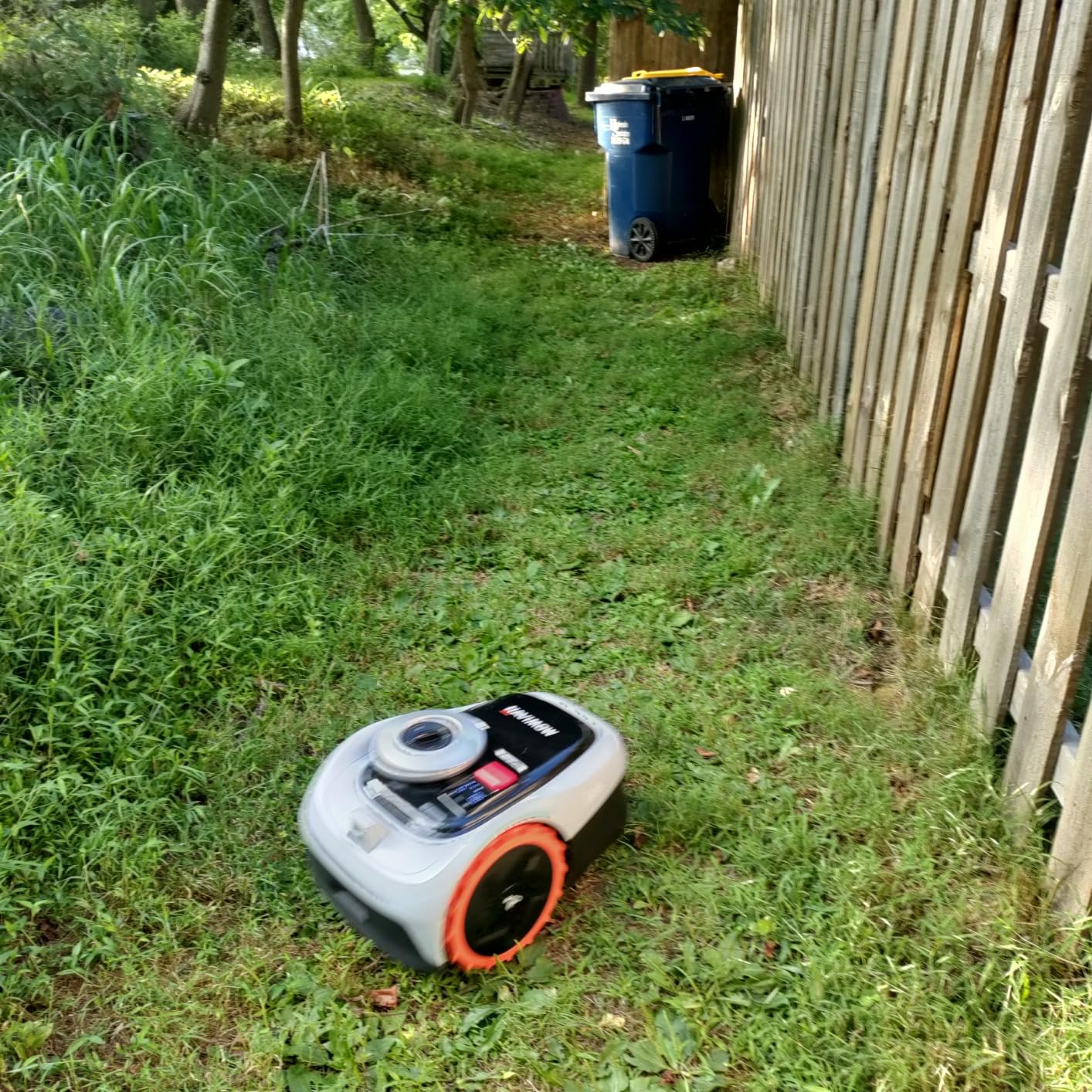
Segway Navimow i105N Review: A Smarter Robot Lawn Mower for Small Yards With Trees
The biggest reason most people hesitate to buy a robot lawn mower is simple: setup. Traditional models often ask you to bury a perimeter wire, troubleshoot signal loss, and spend a weekend doing what the machine was supposed to save you from in the first place.
That is exactly why the Segway Navimow i105N stands out. Priced at a highly competitive $679 and perfectly optimized for properties up to 1/8 acre, it fundamentally changes the entry-level market.
Instead of relying on a boundary wire, the i105N is built around RTK-based positioning with visual assistance, app-guided mapping, and AI-supported obstacle avoidance. On paper, that sounds like the right answer for homeowners who want a neat lawn without turning installation into a project of its own. In practice, it makes the mower especially interesting for small and medium lawns with narrow passages, scattered obstacles, trees, pets, and the kind of real-world yard complexity that breaks older robotic mowers.
This review takes a close look at what the Segway Navimow i105N does well, where it still needs patience, and who should actually buy it.
Why the Segway Navimow i105N gets attention
The robot mower category is shifting fast. Buyers are moving away from perimeter-wire models and toward wire-free systems that promise faster installation, cleaner yard design, and more flexible zone control.
The Navimow i105N fits that trend well because it combines several features that matter in daily use:
- no perimeter wire
- RTK plus camera-assisted navigation
- AI-assisted mapping through the app
- multi-zone mowing control
- quiet operation
- obstacle detection for pets, toys, furniture, and common yard clutter
For homeowners with smaller properties, that combination is more compelling than raw power alone. You are not buying a machine to conquer an estate. You are buying time back every week and trying to keep the lawn consistently trimmed without turning mowing into a recurring task.
First impressions: A Robot Mower Built for Convenience, Not Just Automation
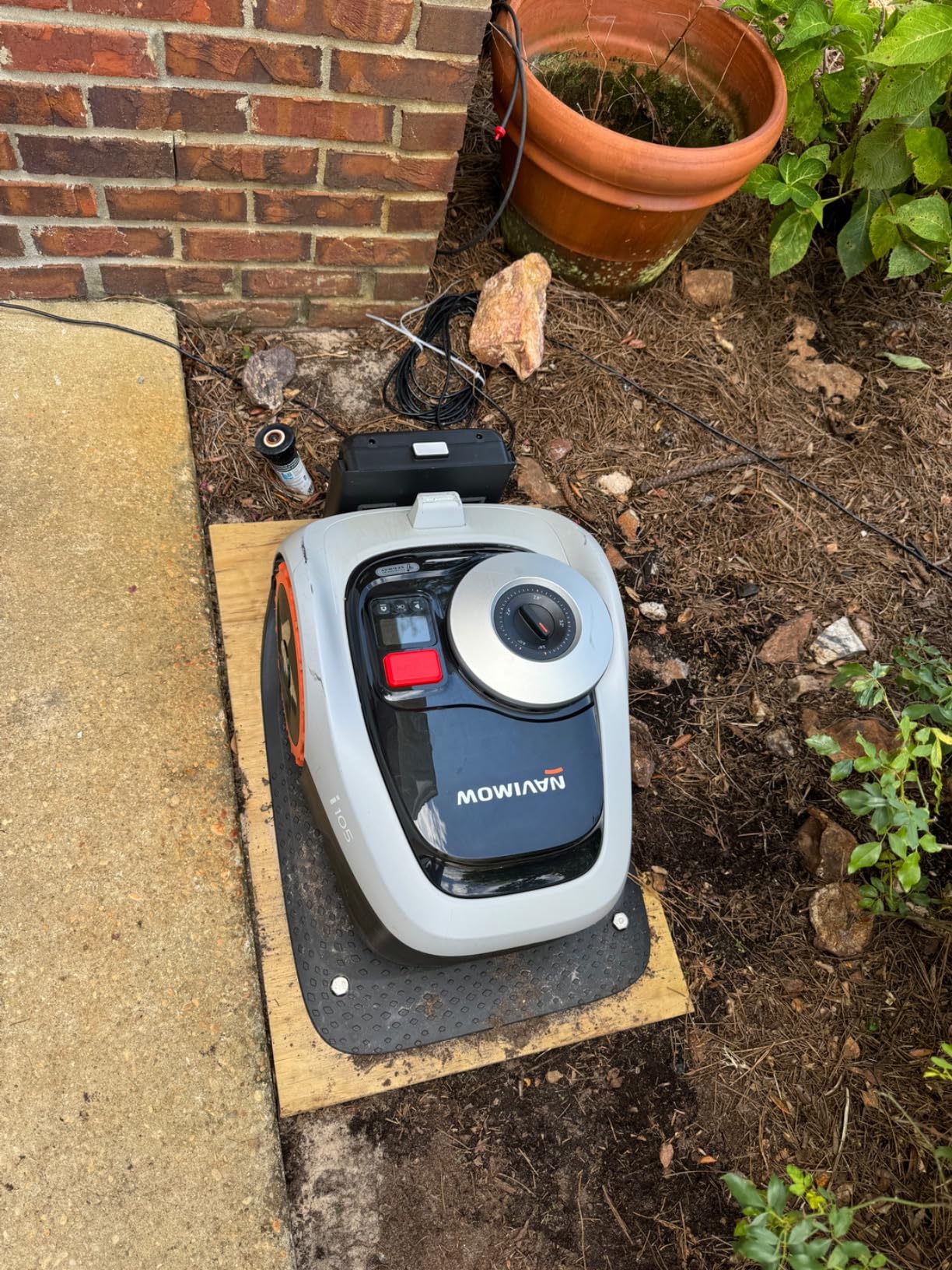
At first glance, the i105N looks more refined than many entry-level robot mowers. The body design is compact, the orange wheel accents make it instantly recognizable, and the top controls are simple enough that the device does not feel intimidating.
The more important point is that its design language matches its purpose. This machine is clearly trying to reduce friction for first-time buyers. That matters because robot mowers are still a category many homeowners do not fully trust yet. People are not just buying mowing hardware. They are buying confidence that the machine will stay inside the right area, avoid hitting the dog toy, and return to charge without drama.
The Navimow i105N is designed to feel approachable in that context. It is not overloaded with visible complexity. Most of the intelligence lives in the app experience and navigation stack rather than in an aggressive hardware appearance.
Wire-free setup is the real selling point
The strongest argument for the Segway Navimow i105N is not the cutting deck, not the styling, and not even the quietness. It is the fact that you do not need to install a perimeter wire.
That changes the ownership experience immediately.
With older robotic mowers, installation often became the most frustrating stage. You had to define the lawn edge physically, protect the wire from accidental cuts, and rework sections whenever the landscape changed. If you updated a flower bed, widened a path, or changed the border near a tree, you were back to adjusting hardware.
With the i105N, setup is much closer to a digital workflow. You place the charging station, position the antenna correctly, connect the mower, and map the mowing area in the app. That feels far more aligned with how people expect modern smart-home devices to work.
In practical terms, that means faster onboarding and easier changes later. You can reshape the mowing area, create channels between separated lawn zones, and define off-limit areas without digging anything up.
For a homeowner who values low-friction maintenance, that alone can be the feature that justifies the purchase.
RTK plus Vision: why it matters for real yards
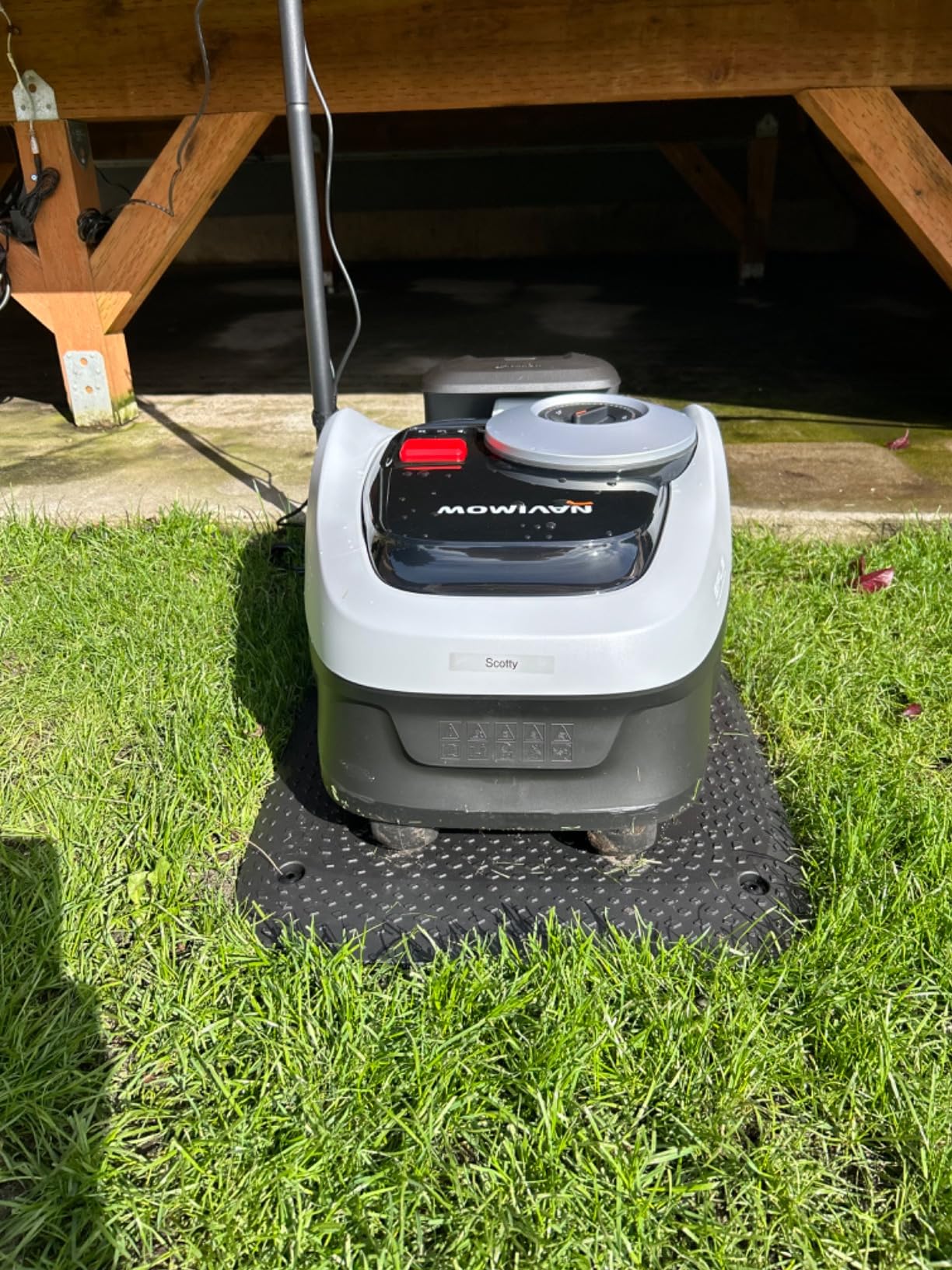
Robot mower marketing often sounds impressive until you remember what an actual yard looks like. Trees block signals. Side yards get narrow. Garden beds create awkward edges. Decorative objects move around. Children leave toys on the grass. Dogs do not respect robot workflows.
This is where the i105N’s RTK plus vision positioning becomes more meaningful than a spec-sheet bullet point.
RTK improves location accuracy dramatically compared with simpler navigation methods. The camera system helps when the environment is more complex, and the official product messaging makes a big deal out of its ability to keep navigating in layouts with trees or narrow corridors.
That positioning stack is especially important for buyers who already know their yard is not a clean rectangle. If your lawn has partial tree cover, a side passage, separate front and back mowing zones, or furniture that changes position throughout the week, accuracy is not a luxury feature. It is the difference between something that feels autonomous and something that demands constant babysitting.
Obstacle avoidance is more than a convenience feature
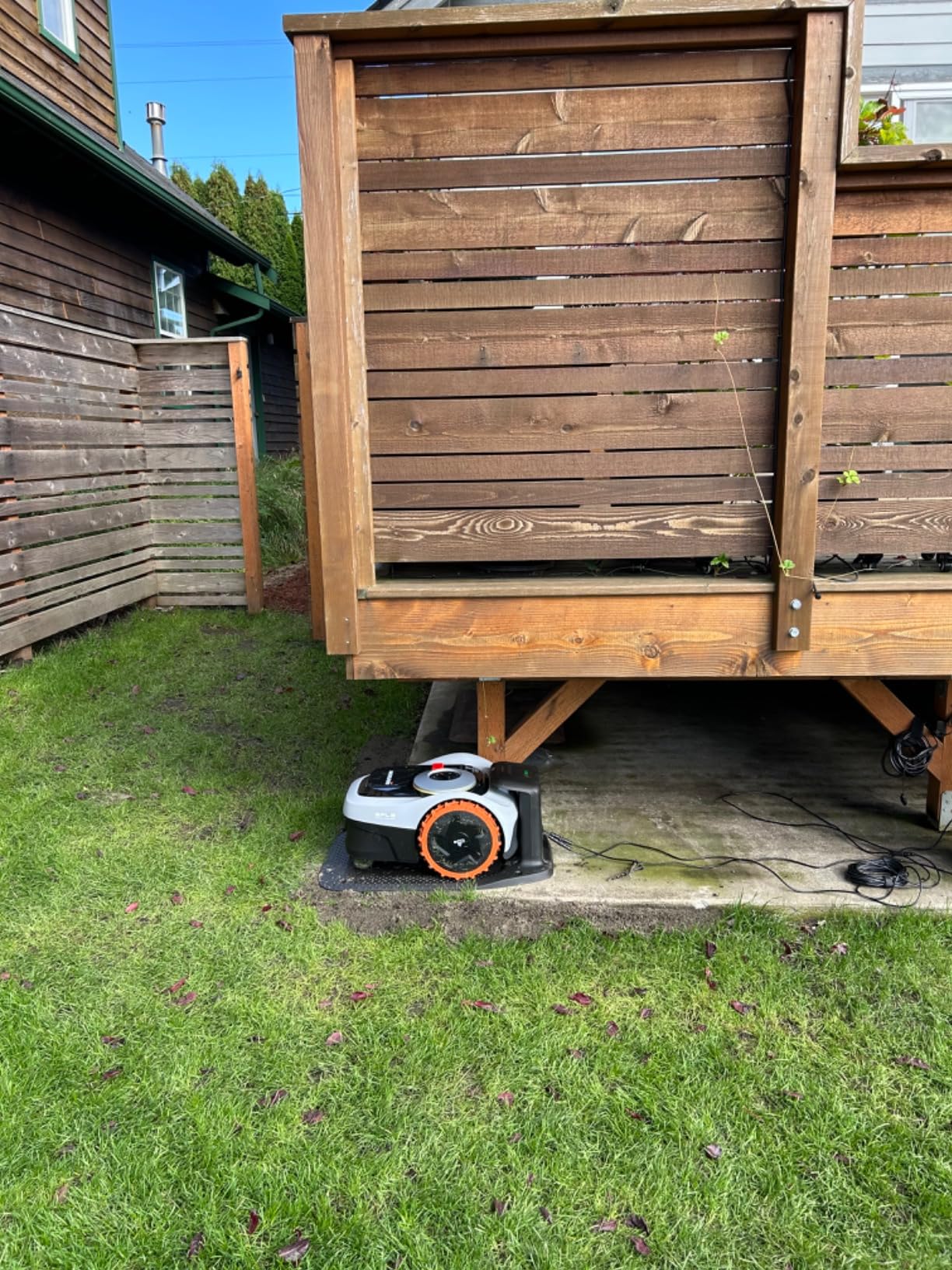
One of the most heavily promoted claims around the i105N is its ability to identify over 150 types of obstacles. Marketing numbers like that can sound inflated, but the broader point is still meaningful: Segway clearly wants this mower positioned as safer and more usable in dynamic family yards.
That matters because a lot of homeowners do not mow a perfect, empty patch of turf. They mow around soccer balls, planters, low furniture, hedgehog-risk garden edges, trunks, toys, and pets. In a normal household, the mower has to coexist with life.
Check Price on Amazon: Segway Navimow i105N Robot Lawn Mower Perimeter
Better obstacle recognition improves three things at once:
1. Safety
A robot mower should not require you to sweep the lawn like a laboratory before every run. Good avoidance reduces the risk of contact with animals, toys, or fragile garden objects.
2. Reliability
A mower that understands obstacles better is less likely to stop mid-task or create erratic rerouting behavior.
3. Trust
This is the overlooked factor. Homeowners keep using automation when they trust it. If the mower moves calmly around objects and behaves predictably, it becomes something you schedule in the background instead of something you monitor.
For buyers with pets or active families, this may be one of the most persuasive parts of the entire product.
How it handles trees and complicated lawns
The phrase “works even with trees” appears in marketing for a reason. Tree cover is one of the most common pain points in robotic lawn mowing.
A lot of wire-free mowers look excellent in fully open spaces but become less convincing once the yard includes canopy coverage, irregular borders, or mixed open and shaded zones. The Navimow i105N is clearly designed to reassure exactly this type of buyer.
In theory, the combination of EFLS 2.0 and visual support should help it stay stable in areas where satellite visibility is not ideal. In practice, this makes the mower more appealing to suburban homeowners whose lawns are landscaped rather than bare and simple.
If your yard includes mature trees, curved edges, flower beds, and paths that narrow near the house, the i105N is easier to take seriously than a low-cost robot mower that relies on simpler navigation logic.
That does not mean every difficult yard becomes effortless. It means the machine is built with those problems in mind rather than pretending they do not exist.
Real-world appeal: quiet enough to disappear into the routine
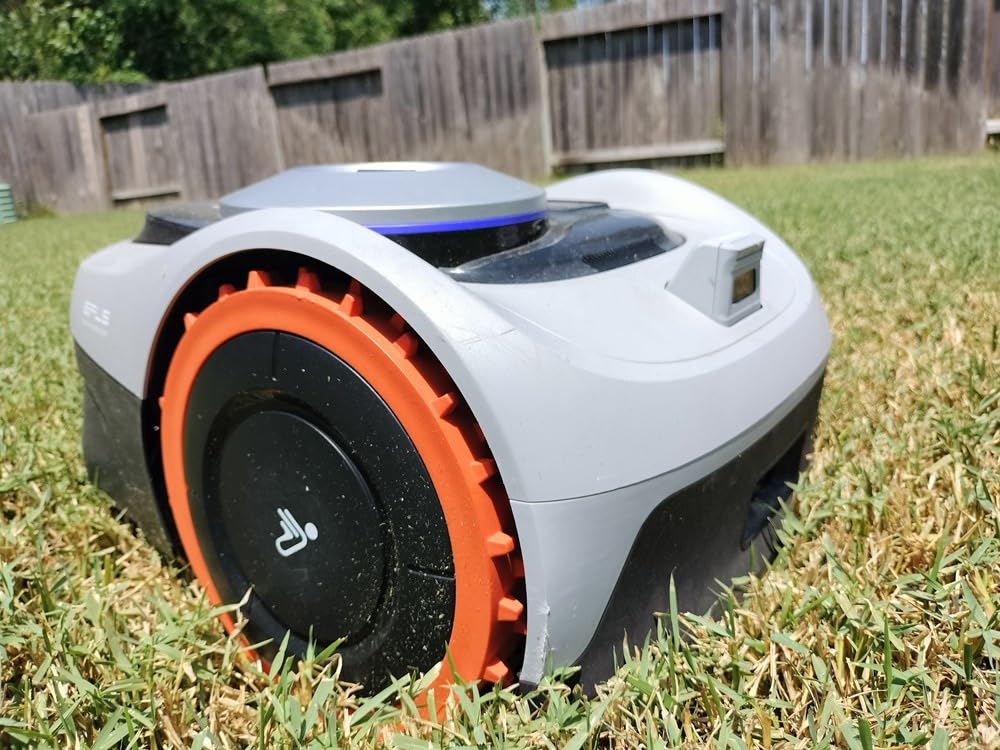
A low-noise lawn mower is not a glamorous feature until you live with one.
Traditional gas mowers dominate the entire soundscape of a yard. Even many electric mowers still announce themselves. Robot mowers succeed partly because they turn lawn care into something less visible and less disruptive.
The Navimow i105N is marketed at 58dB(A), and that is a meaningful number for day-to-day use. It suggests a machine that can run without becoming the center of attention, which is exactly what homeowners want from this category.
Quiet mowing changes behavior in subtle ways:
- you are more willing to schedule frequent trims
- neighbors are less likely to notice or care
- pets are less likely to be disturbed
- the lawn stays maintained without the psychological burden of “mowing day”
This is one of the reasons robot mowers often feel like a lifestyle upgrade rather than just a yard tool. The goal is not merely to automate cutting. It is to remove mowing from your weekly mental load.
Small-yard fit: where the i105N makes the most sense
Not every robot mower is made for the same buyer. The i105N makes the most sense for a fairly specific type of property.
It is a strong fit when:
- your lawn is on the smaller side (ideal for 1/8 acre)
- you want a wire-free setup
- your yard has trees, edges, furniture, or common obstacles
- you prefer app-based zone control
- you care about quiet operation
- you want consistent maintenance rather than occasional heavy mowing
It is less ideal if:
- your property is much larger and you want faster single-session coverage
- you need aggressive hill-climbing beyond typical residential slopes
- your lawn is extremely rugged or deeply segmented
- you expect a zero-learning-curve setup in a very complex environment
That last point is worth saying clearly. Products like this are easier than older robotic mowers, but they are not magic. A smart mower still depends on smart setup. Antenna placement, map quality, and correct channel definition all influence whether ownership feels smooth or fussy.
Traction and slopes: good for normal residential complexity

The i105N is promoted as being able to handle slopes up to 30 percent, or around 17 degrees. For the average suburban lawn, that is a practical figure. It suggests the mower is built for moderate inclines rather than dramatic terrain.
More importantly, Segway also highlights traction control and skid resistance in its product imagery. That makes sense, because slope handling is not just about climbing. It is about staying composed on imperfect grass, slightly uneven ground, and areas where traction drops after irrigation or weather changes.
For many buyers, this matters less as an athletic brag and more as an assurance that the mower will not chew up the lawn or lose composure when conditions are less than perfect.
If your property has gentle to moderate slopes, transitions between flat and uneven ground, or slightly challenging spots near landscaping, the i105N appears aimed directly at that use case.
Check Price on Amazon: Segway Navimow i105N Robot Lawn Mower Perimeter
App control and multi-zone management make it feel modern

One of the clearest signs that a robot mower belongs in 2025 and beyond is whether the app feels central to the experience instead of optional.
The Navimow app is part of the i105N’s identity. It handles mapping, schedule control, zone management, mowing direction, task progress, and in some cases security-related functions. That is important because the best smart devices shift complexity into a clean software layer.
For homeowners with more than one mowing area, multi-zone management is especially valuable. Front and back lawns are rarely connected in a perfectly mower-friendly way. The ability to define zones and create channels lets the mower work across a more realistic property layout.
This gives the i105N an advantage over simple robotic mowers that work best only when the yard is one uninterrupted patch of grass.
What the reviews suggest in real life
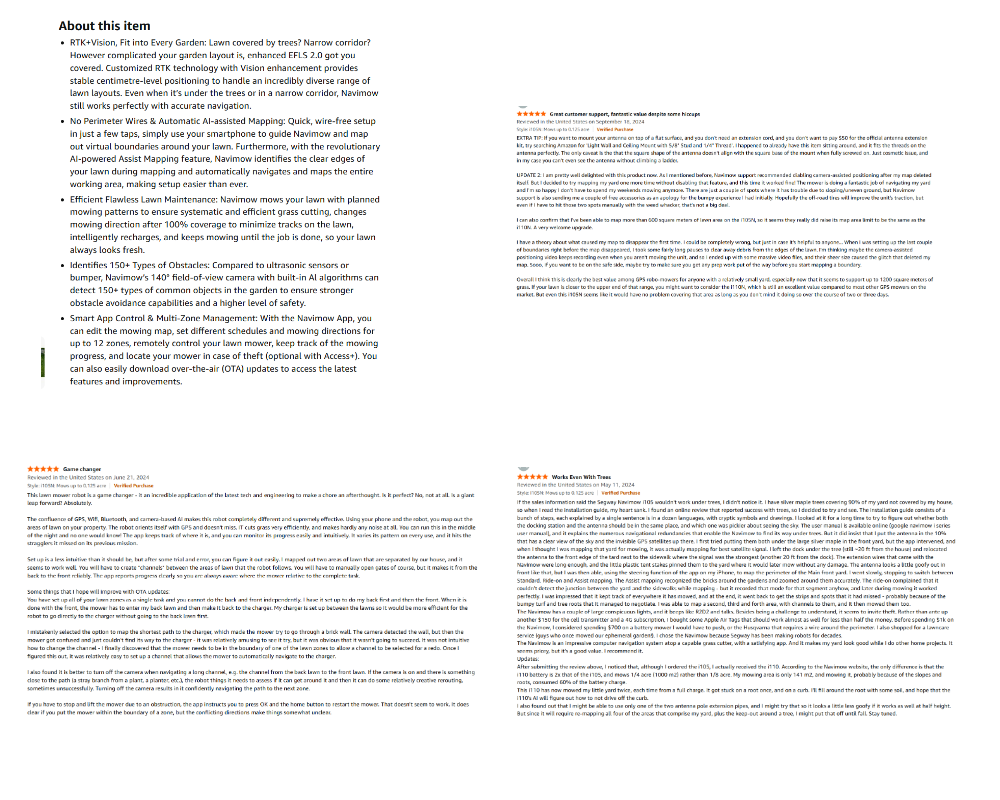
Online buyer feedback tends to land in a familiar pattern for advanced robot mowers: strong enthusiasm once the setup is dialed in, with most frustration showing up during the initial mapping and configuration stage.
That pattern actually makes sense.
When a mower like this works, it delivers something very attractive: regular lawn maintenance with almost no recurring labor. Buyers tend to sound genuinely relieved when the machine settles into routine operation. They talk about getting weekends back, not dragging out a mower, and enjoying a lawn that always looks maintained instead of going through cycles of overgrowth and catch-up cuts.
Where complaints appear, they usually involve one of three areas:
Setup patience
Wire-free does not mean thought-free. First-time users may still need to learn the logic of the app, antenna placement, and mapping workflow.
Complex edge cases
Long channels, unusual obstructions, tricky navigation decisions, or changing yard conditions can still create moments where the system needs adjustment.
Expectation mismatch
Some buyers want complete plug-and-play simplicity. A product like this gets close, but it still rewards users who spend time creating a clean digital map and understanding how the mower navigates.
That is not a failure of the i105N so much as the reality of the category. Advanced robotic lawn care has become much easier, but not yet invisible.
The biggest advantages of the Segway Navimow i105N
No perimeter wire
This is still the headline feature. It removes a major barrier to entry and makes later yard changes far easier.
Better fit for real family yards
Obstacle detection, pet awareness, and flexible mapping make the mower more relevant for lived-in spaces instead of idealized demo lawns.
Strong value for smaller properties
For buyers who do not need a machine for huge acreage, the i105N offers a premium-feeling navigation experience without stepping into the largest and most expensive class.
Quiet day-to-day operation
A robot mower should blend into the background, and the low-noise design supports that.
Better tree-yard story than many alternatives
The RTK plus vision positioning is one of the strongest reasons to consider this model if your lawn is partially covered or broken up by landscaping.
The limitations buyers should understand
No product in this category is perfect, and the i105N still asks for a realistic mindset.
It is not the best tool for very large lawns
If your property is pushing well beyond the model’s intended coverage area, you should step up to a larger model rather than forcing the smaller machine to stretch.
Setup quality shapes the ownership experience
A great map and a well-positioned antenna can make the difference between a smooth routine and recurring confusion.
Complicated terrain can still expose edge cases
Roots, curbs, narrow transitions, or awkward slopes can still challenge any robot mower, even one with good intelligence.
It is a maintenance simplifier, not a miracle
You still need to think about lawn condition, edging, seasonal growth changes, and occasional cleanup. The machine reduces labor. It does not eliminate yard ownership.
Comparison mindset: who should buy it instead of a traditional mower
A traditional push mower or self-propelled mower still makes sense if you have a tiny lawn, enjoy mowing, or simply do not care about automation. But for everyone else, the i105N makes a persuasive case built on consistency.
Instead of one loud mowing session each week, you get smaller, more frequent trims.
Instead of dedicating time to the yard, you manage mowing from the app.
Instead of living with a lawn that alternates between overgrown and freshly cut, you get a more stable appearance.
That consistency is the real lifestyle appeal of a robot mower. The lawn usually looks “done,” and the work mostly disappears from your schedule.
Who the Segway Navimow i105N is best for
The ideal buyer looks something like this:
- homeowner with a small to modest-size lawn (up to 1/8 acre)
- wants a robot lawn mower without perimeter wire
- has trees, pets, obstacles, or multiple lawn sections
- prefers quiet operation
- values app control and modern smart-home convenience
- is willing to spend some setup time to save weekly labor later
For that buyer, the i105N is not just interesting. It is one of the more practical entries in the current robot mower conversation.
Final verdict
The Segway Navimow i105N succeeds because it solves the right problem.
A lot of people do not hate mowing because cutting grass is physically impossible. They hate it because it is repetitive, noisy, time-consuming, and difficult to keep consistent during busy weeks. The i105N addresses that pain with the features that matter most right now: wire-free installation, smarter navigation, obstacle awareness, quiet operation, and app-led control.
Its strongest appeal is not that it looks futuristic. It is that it feels usable for normal homeowners with imperfect yards.
If you have a smaller lawn, want to avoid perimeter wire installation, and need a mower that can handle trees, obstacles, and a more realistic yard layout, the Segway Navimow i105N is a compelling option. It is not flawless, and it still benefits from careful setup, but it moves the robot mower category closer to what most buyers actually want: something smart enough to save time without creating a new hobby in the process.
Quick pros and cons
Pros
- no perimeter wire required
- RTK plus vision navigation
- good fit for yards with trees and obstacles
- quiet enough for regular background operation
- convenient app control and multi-zone support
- strong everyday value for smaller lawns
Cons
- setup still requires attention
- not intended for very large properties
- complex terrain can still create edge-case issues
- some buyers may expect a more plug-and-play experience than reality allows
Buying recommendation
If your goal is to automate lawn care for a smaller yard and you care more about convenience, clean setup, and dependable weekly upkeep than raw mowing size, the Segway Navimow i105N is easy to recommend.
If your lawn is larger, steeper, or much more demanding, move up within the Navimow range or compare against higher-end wire-free competitors before deciding.
Check Price on Amazon: Segway Navimow i105N Robot Lawn Mower Perimeter
FAQ
Is the Segway Navimow i105N really wire-free?
Yes. The main appeal of the i105N is that it does not need a traditional perimeter wire around the lawn.
Is it good for yards with trees?
It is one of the more appealing options for that use case because it combines RTK positioning with vision support, which helps in more complex yards.
Can it avoid pets and toys?
It is designed for stronger obstacle recognition than simpler robot mowers, which makes it better suited to active family yards with pets and common lawn objects.
Is it quiet?
Yes. Quiet operation is one of the product’s more attractive everyday benefits and one of the reasons it feels less disruptive than traditional mowing.
Is it worth it for a small lawn?
For homeowners who value time savings and a consistently maintained lawn, it can be a very strong fit, especially compared with the recurring effort of manual mowing.