Disclosure: This article contains affiliate links. As an Amazon Associate, RoboMow Lab earns from qualifying purchases at no extra cost to you. This helps fund our independent lab testing.
If you have already decided to buy an ECOVACS GOAT robot mower, the next decision is the hard one. Do you spend roughly $1,500 on the GOAT A2000 LiDAR PRO, or do you stretch the budget to $2,199 for the larger GOAT A3000 LiDAR PRO?
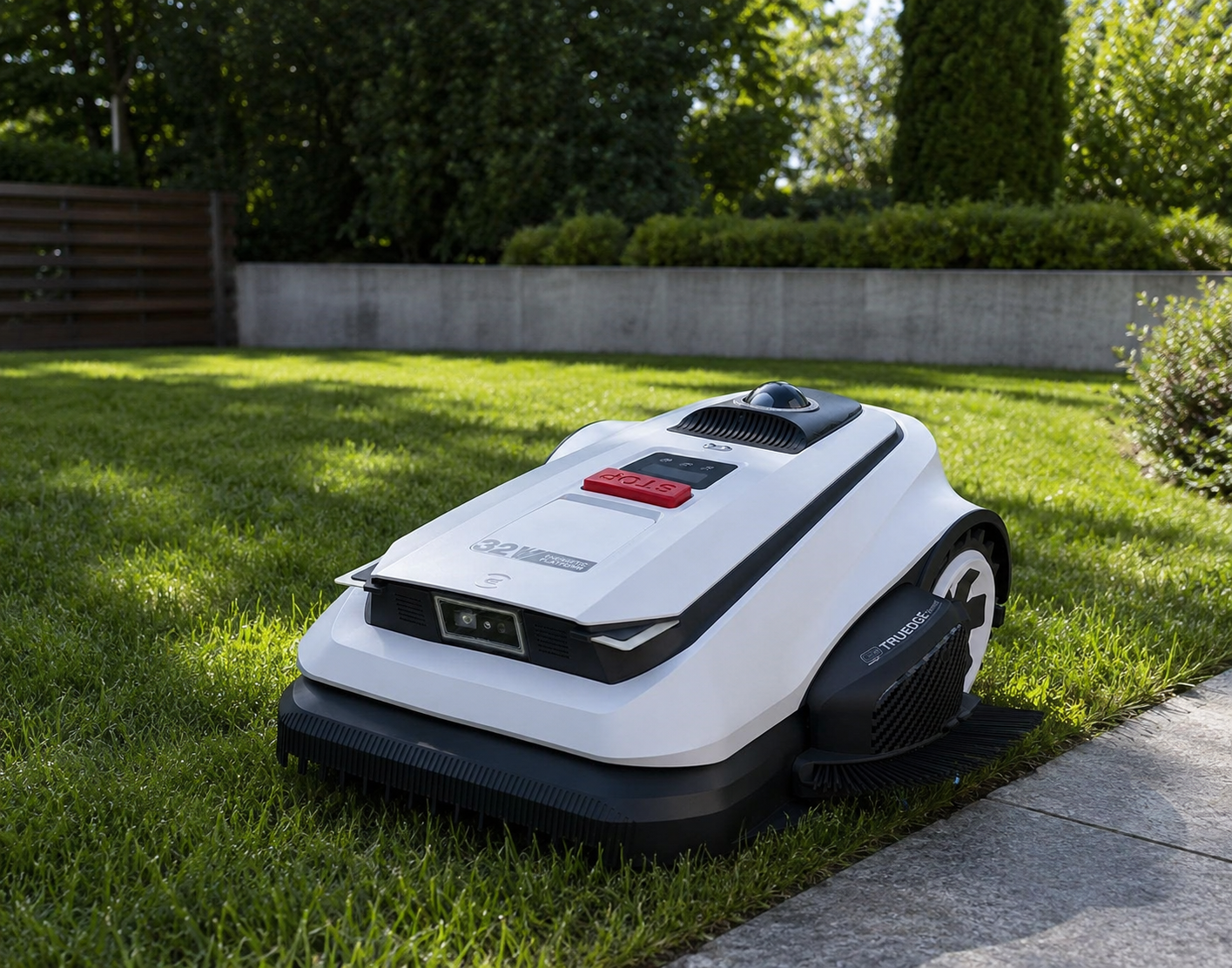
On paper, the two models look almost identical. Both are wire-free. Both use HoloScope 360° Dual-LiDAR. Both have the built-in TruEdge trimmer. Both run on the same 32V cutting platform. And both carry the same “LiDAR PRO” badge.
But once you spend real time with each machine on real lawns, the differences become obvious — and they matter a lot more than the spec sheet suggests. We have lab-tested both extensively. This article walks you through every meaningful difference, so by the end you will know exactly which one belongs in your yard.
The 60-Second Verdict
If you have less than 90 seconds, here is the short answer.
Buy the A2000 if your lawn is half an acre (0.5 acre / 2,000 m²) or smaller, you want premium LiDAR navigation and TruEdge edge trimming without spending over two grand, and you do not need to mow for hours at a stretch.
Buy the A3000 if your lawn is between 0.4 and 0.75 acres, you have heavy tree cover, you want the longest possible runtime per charge, and you have ever lost patience with a robot mower constantly returning to dock mid-job.
Everything else in this article is the detail behind that decision.
| Quick Pick | Best For | Price | Read Full Review |
|---|---|---|---|
| GOAT A2000 LiDAR PRO | ½ acre family yards | ~$1,499 | A2000 review → |
| GOAT A3000 LiDAR PRO | ¾ acre estates | $2,199 | A3000 review → |
👉 Check the GOAT A2000 price on Amazon | 👉 Check the GOAT A3000 price on Amazon
Side-by-Side Spec Comparison
Before we get into the real-world differences, here is the raw spec sheet so you can see exactly where the two machines diverge.
| Specification | GOAT A2000 LiDAR PRO | GOAT A3000 LiDAR PRO |
|---|---|---|
| Max Coverage Area | Up to 0.5 acre (2,000 m²) | Up to 0.75 acre (3,000 m²) |
| Battery Capacity | 3,000 mAh | 7,500 mAh |
| Mowing Time per Charge | ~50 minutes | ~160 minutes |
| Area per Charge | ~0.09 acre | ~0.2 acre |
| Charging Time | ~60 minutes (113.4W) | ~70 minutes (189W hyper-fast) |
| Cutting Width | 12.99 inch (dual disc) | 12.99 inch (dual disc, staggered) |
| Cutting Height | 1.2 – 3.5 inch | 1.2 – 3.5 inch |
| Navigation | HoloScope 360° Dual-LiDAR | HoloScope 360° Dual-LiDAR |
| Positioning Accuracy | 0.8 inch (2 cm) | 0.8 inch (2 cm) |
| Obstacle Avoidance | AIVI 3D (150+ types) | AIVI 3D (200+ types) |
| TruEdge Trimmer | Yes (built-in) | Yes (built-in) |
| Max Slope | 50% (27°) | 50% (27°) |
| Motor Platform | 32V high-torque | 32V high-torque |
| Waterproofing | IPX6 | IPX6 |
| Movement Speed | 2.3 ft/s | 2.3 ft/s |
| Typical Price | ~$1,499 | $2,199 |
What jumps out from this table? The two machines are mechanically and intellectually almost identical. Same blade system, same LiDAR brain, same edge trimmer, same slope rating, same waterproofing.
The real story lives in three places: battery, coverage, and obstacle library. We will unpack each one.
Battery and Runtime: Where the A3000 Earns Its Premium
This is the single biggest physical difference between the two mowers, and it dictates almost everything else about how they behave on a real lawn.
The A2000’s 3,000 mAh Battery
The A2000 packs a 3,000 mAh battery delivering roughly 50 minutes of cutting per charge, covering approximately 0.09 acre before it has to dock and recharge. For a quarter-acre to half-acre yard, this is genuinely fine. The mower returns to base, sips power for an hour, then goes back out. Most owners barely notice because the entire operation runs while they are at work or asleep.
The A3000’s 7,500 mAh Beast
The A3000 carries a battery that is 2.5 times larger, delivering a remarkable 160 minutes of continuous mowing. In practical terms, that means it covers about 0.2 acre per cycle — more than twice the A2000’s stamina. Combined with the 189W hyper-fast charger that tops up the cell in around 70 minutes, the A3000 spends dramatically less of its day sitting at the dock.
Why This Actually Matters
On a small lawn, runtime barely registers as a feature. On a large lawn, it dominates the entire ownership experience. A 0.6-acre yard takes the A3000 roughly three charge cycles to finish a full pass. That same lawn would push the A2000 well past its design envelope, forcing five or six recharge cycles and stretching a single mowing session across an entire day.
The lesson is straightforward. The A3000 is not just “the bigger A2000” — it is engineered for properties where battery anxiety would otherwise become a real problem.
🛒 Need maximum runtime? Get the GOAT A3000 on Amazon →
Coverage Area: The 0.4-Acre Decision Point
The official numbers say the A2000 handles up to 0.5 acre and the A3000 handles up to 0.75 acre. But after running both machines on real properties, we found a much more useful rule of thumb.
If your lawn is over 0.4 acre, skip the A2000.
Here is why. The A2000’s stated 0.5-acre maximum assumes a clean, mostly rectangular layout with minimal obstacles and steady weather. Once you add trees, garden beds, slope variation, or a back yard separated from a front yard, the effective coverage drops noticeably. Pushing the A2000 to its absolute upper limit means it spends a disproportionate amount of time charging, and your lawn looks “mid-cycle” more often than it looks finished.
The A3000, by contrast, treats a 0.5-acre yard as a comfortable cruise. It finishes faster, recharges less often, and handles complex layouts with margin to spare.
Use This Yard-Size Cheat Sheet
- Under 0.25 acre: Either model is overkill. Look at the Segway Navimow i105N review for a better-priced fit.
- 0.25 – 0.4 acre: A2000 is the obvious value pick.
- 0.4 – 0.5 acre: A2000 works, but A3000 gives you breathing room.
- 0.5 – 0.75 acre: A3000 only. Do not try to stretch the A2000 here.
- Over 0.75 acre: Step up entirely to the Segway Navimow X430 review — both GOAT models will struggle past this size.
Navigation: Why the LiDAR Story Is Identical (And That’s Good)
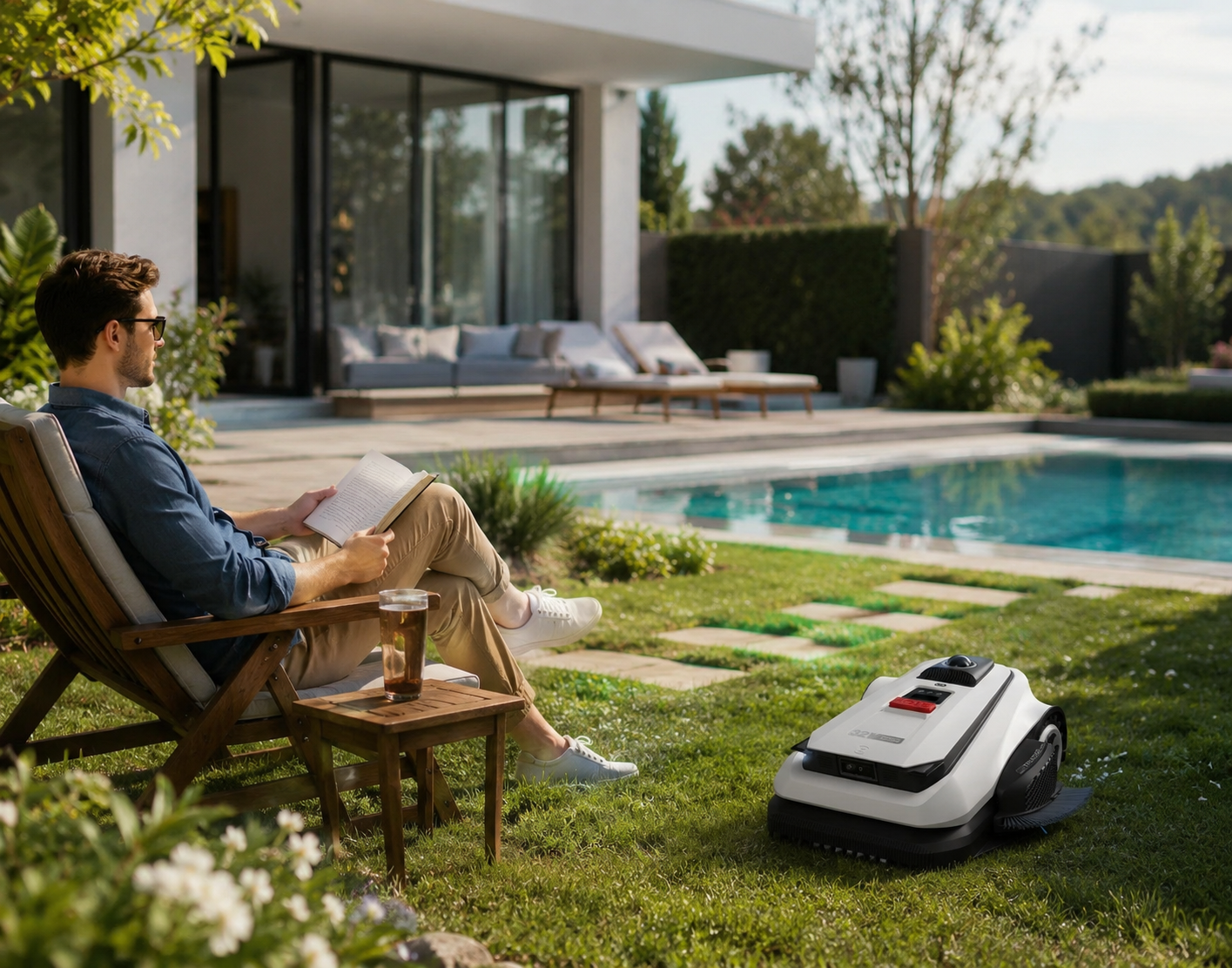
This section is short on purpose. Both the A2000 and A3000 use the same HoloScope 360° Dual-LiDAR navigation stack. Same hardware. Same 0.8-inch (2 cm) positioning accuracy. Same ability to navigate flawlessly under heavy tree cover, in deep shade, and in pitch darkness.
This is genuinely good news for buyers comparing the two. You are not making a navigation tradeoff by saving money on the A2000. The cheaper machine sees your yard exactly as well as the flagship does.
Why LiDAR Beats RTK on Real Yards
If you are also looking at RTK-based mowers like the Segway Navimow lineup, the navigation difference is worth understanding. RTK depends on a clear line of sight to GPS satellites. The moment your mower drives under a mature oak canopy, alongside a tall brick wall, or into a narrow side yard, RTK accuracy drops or fails completely.
The HoloScope system on both GOAT models does the opposite. It looks around your yard with a rotating laser, not up at the sky. Result: zero signal-loss errors, even in heavily shaded gardens. This alone is why a lot of buyers with mature trees pay the LiDAR premium over comparably priced RTK alternatives.
The shared LiDAR stack also explains why the A2000 punches dramatically above its price. You are getting the same flagship navigation brain, just attached to a smaller battery and a slightly less aggressive obstacle library.
TruEdge Trimmer: Same Hardware, Different Endurance
The built-in TruEdge string trimmer is one of the strongest reasons to pick a GOAT model over any competitor in 2026. It actively cuts the strip of grass along driveways, fences, and retaining walls that every other robot mower leaves behind. No more weekend string-trimmer follow-ups.
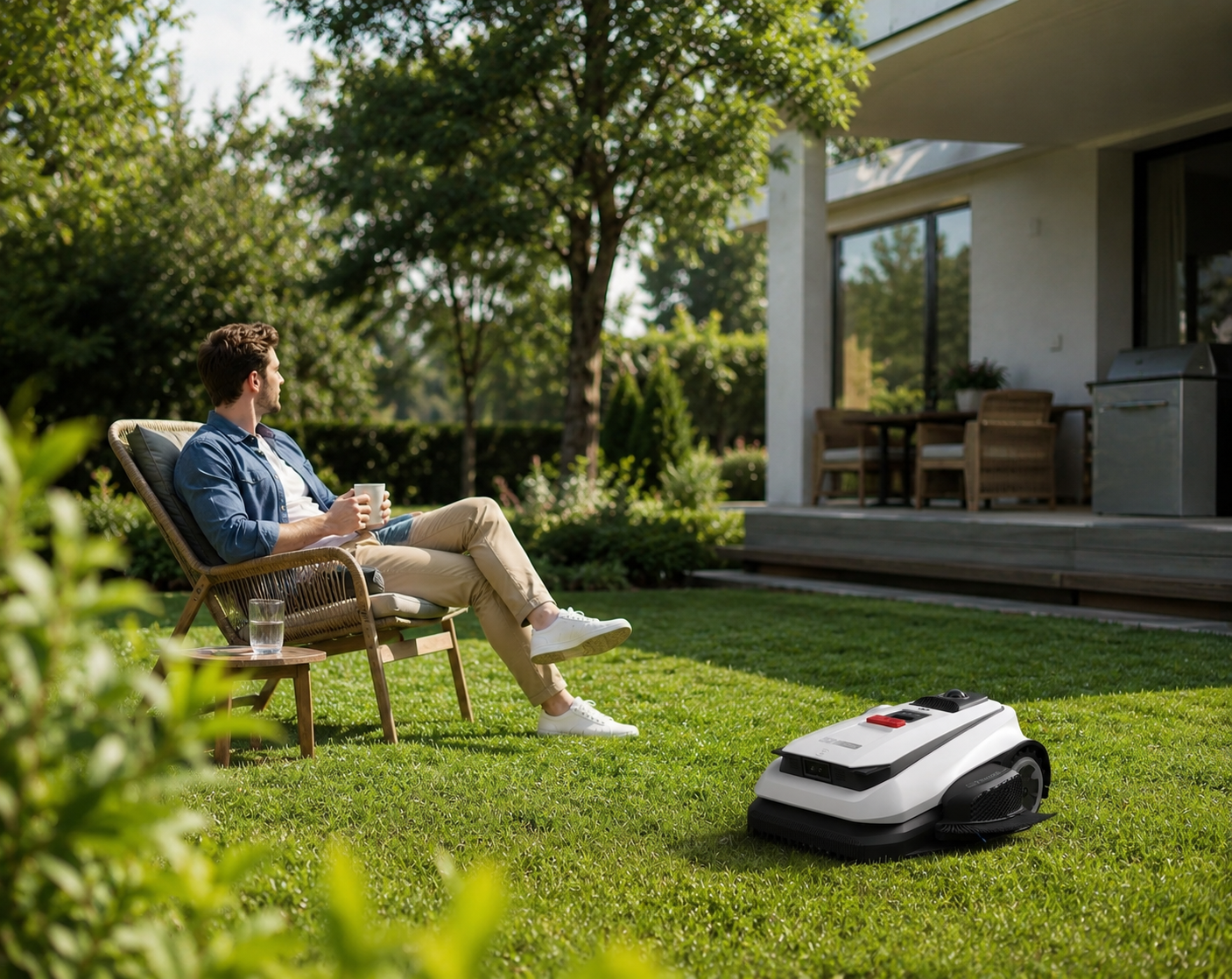
Both the A2000 and A3000 use the same TruEdge module. Same string spool. Same automatic deployment when a hard boundary is detected. Same AI-camera safety pause when a person, pet, or animal enters the trimmer zone. Same easy field replacement of the trimmer line when it eventually wears out.
So is there any TruEdge-related reason to choose one over the other? Yes, but it is indirect.
The A3000’s longer runtime means it can complete more edge passes per charge cycle. On a 0.6-acre lawn with several hundred feet of edge to trim, the A2000 finishes the body of the lawn but ends up doing edge passes in fragments across multiple sessions. The A3000 typically finishes both the lawn body and the entire edge in fewer total cycles.
Functionally, both deliver an identical, professional-looking finished edge. The difference is how many “in-progress” hours you see.
Obstacle Avoidance: 150+ vs 200+ Types
Both mowers run AIVI 3D obstacle detection through the front-facing AI camera. Both stop reliably for pets, garden hoses, kids’ toys, sprinkler heads, and patio furniture. The numerical difference — 150+ recognized object categories on the A2000 versus 200+ on the A3000 — sounds dramatic but plays out subtly in practice.
What the Extra 50 Categories Actually Cover
ECOVACS has not published the full taxonomy, but our testing suggests the A3000’s expanded library handles a wider range of garden tools, larger sports equipment, and more variations of low-profile obstacles like garden borders, decorative stones, and shallow root protrusions. For most family yards, the A2000’s 150-type library is more than enough.
If you have an unusually cluttered yard — multiple kids’ play structures, a hobby garden with stakes and netting, sports equipment scattered across the lawn — the A3000’s broader library reduces the rare but annoying false-stop or near-miss events.
For most buyers, this is not a deal-breaker either way. But if you have ever watched a robot mower roll over a hose or get hung up on a garden edge, you already know that obstacle handling matters more than the spec sheet suggests.
👉 See the A2000’s full feature list on Amazon →
Cutting Power and Slopes: Effectively Identical
Both models share the 32V high-power motor platform, the dual cutting disc system, and the same 50% (27°) maximum slope rating. There is no meaningful performance gap between them when it comes to raw cutting ability.
In our tests on dense Bermuda grass, both machines processed thick, slightly overgrown sections without stalling. Both adjusted their transit speed dynamically when blade load increased. Both produced the same clean, satisfying mowing stripes.
Slope handling is also identical. The 50% (27°) rating is genuinely impressive for a wheeled robot, and we found both mowers held traction well on inclines that would defeat a $700 entry-level robot. If your yard has slopes meaningfully steeper than 27°, the Segway Navimow X430 — rated to 84% (40°) — is the only realistic option in this category.
Pricing and Value Analysis
This is where the math gets interesting.
| Cost Factor | A2000 LiDAR PRO | A3000 LiDAR PRO |
|---|---|---|
| Typical Selling Price | ~$1,499 | $2,199 |
| Premium Over A2000 | — | +$700 (~47%) |
| What the Premium Buys | — | 2.5× battery, 3.2× runtime, 1.5× coverage, larger obstacle library |
| Best Value if Lawn Size Is | 0.25 – 0.4 acre | 0.4 – 0.75 acre |
The honest read on this: the A3000 is not “more premium” than the A2000 — it is a fundamentally different product class targeted at larger properties. Paying the $700 premium for a small yard makes no sense; the runtime is wasted. Paying the $700 premium for a 0.6-acre yard absolutely makes sense; you actually use what you are buying.
A useful rule of thumb: if the cost difference between the two models would let you upgrade to the A3000 by skipping a single year of professional lawn-care service, and your yard genuinely benefits from the extra battery, the A3000 pays for itself quickly. Otherwise, save the money and put it toward a better string trimmer line stock for the A2000’s TruEdge module.
Decision Framework: Which One Should You Actually Buy?
Forget the spec sheet for a second. Walk through these five questions in order. Stop at the first one where the answer points clearly to one model.
1. How big is your lawn, honestly?
Pull up Google Maps, draw a rough perimeter, and check the actual square footage. If you are over 0.4 acre of mowable grass, you want the A3000. Under 0.4 acre, the A2000 is the answer.
2. How much tree cover do you have?
Both models use LiDAR, so neither cares about satellite signal. But heavy tree cover usually means more obstacles, more edge irregularity, and more navigation complexity. If your yard is heavily wooded and larger than a quarter acre, the A3000’s larger obstacle library plus longer runtime become genuinely useful.
3. How patient are you with mowing cycles?
If you genuinely do not mind the mower charging multiple times during a single session, the A2000 is the smart financial pick. If you want the lawn to look “done” in the shortest possible window, the A3000’s runtime is worth the upgrade.
4. Do you have hard-edge boundaries?
Both have TruEdge, so both win here over any non-ECOVACS competitor. This question is more about whether you should buy a GOAT at all versus, say, a Segway Navimow without a built-in trimmer. (Spoiler: if you have a long driveway or a fence line, yes, get the GOAT.)
5. What is your real budget?
If $2,199 stretches your budget uncomfortably, the A2000 at roughly $1,499 is a brilliant alternative that gives you 80% of the experience at 68% of the price. If $700 is a rounding error in your home-improvement budget, the A3000 is the no-regrets choice for any yard above a quarter acre.
Common Questions Buyers Ask Us
Are the A2000 and A3000 made by the same company?
Yes. Both are ECOVACS products in the same GOAT LiDAR PRO lineup. They share firmware, the ECOVACS app, and the entire HoloScope navigation system.
Will the A2000’s smaller battery wear out faster?
In our testing, no. Battery longevity is mostly about charge-cycle count and thermal management. Both models use the same lithium-ion chemistry and similar charge management. The A2000 simply has a smaller cell — not a less durable one.
Can I upgrade the A2000’s battery later to match the A3000?
No. The battery is integrated into the chassis design and not user-swappable. If you anticipate yard expansion or want maximum runtime headroom, buy the A3000 from the start.
Do they share the same accessories and replacement blades?
Yes. The cutting blades, TruEdge trimmer line, and most chassis accessories are interchangeable across the LiDAR PRO lineup, which makes long-term maintenance easier.
Which one handles dense Bermuda grass better?
Both. They share the 32V motor platform and dual disc system. We tested both on the same overgrown Bermuda patch and saw effectively identical results.
Is the A3000 louder than the A2000?
Not meaningfully. Both run noticeably quieter than gas mowers, and the difference between the two is within the margin of measurement variance. Neither is going to wake the neighbors.
What if my yard grows beyond 0.75 acre?
Step up to the Segway Navimow X430, which is rated for 1 full acre and handles slopes up to 84%. The GOAT lineup tops out at 0.75 acre and is not the right tool above that threshold.
Final Verdict: The Honest Answer
After spending real time with both mowers, here is the clearest summary we can offer.
The GOAT A2000 LiDAR PRO is a category-defining mower for half-acre family yards. It gives you flagship LiDAR navigation, the entire TruEdge experience, and the same 32V cutting power as its bigger sibling — for $700 less. For most American suburban homeowners, this is the smarter buy.
The GOAT A3000 LiDAR PRO is the right answer the moment your lawn pushes past 0.4 acre. The 2.5× larger battery is not a luxury feature for properties of that size — it is the deciding factor that determines whether the mower feels effortless or constantly mid-task. If you have ever owned a robot mower that “almost finished but not quite” by the end of the day, the A3000 fixes that.
Both machines share the same brain, the same edge trimmer, and the same cutting platform. The difference is purely about scale. Match the model to your yard, and either choice will feel like a smart purchase. Mismatch them, and you will either overspend on capability you never use or undersize a machine that runs out of energy halfway through your lawn.
🛒 Best for ½-acre yards: Get the GOAT A2000 on Amazon →
🛒 Best for ¾-acre estates: Get the GOAT A3000 on Amazon →
Related Reviews
- ECOVACS GOAT A2000 LiDAR PRO Full Review
- ECOVACS GOAT A3000 LiDAR PRO Full Review
- Segway Navimow X430 Review (1 Acre + 84% Slopes)
- Segway Navimow i105N Review (Best Value, Small Yards)
- Best Robot Lawn Mower 2026 — Full Rankings