You know that feeling when you’re standing at the bottom of your yard, looking up at that 30-degree slope, and you just know the mower you’re pushing is going to give out halfway up? Again. Or worse, you’re eyeballing the neighbor’s $3,000 robotic mower that’s been sitting in their yard for a week because it can’t handle the terrain, and you’re trying not to smirk.
I’ve been there. My yard is 0.75 acres of what the real estate listing called “gentle rolling terrain” — which is realtor-speak for “you’ll need a climbing harness.” I’ve burned through two push mowers and one battery-powered unit that sounded like a dying blender every time it hit a bump. So when I got my hands on the Mammotion LUBA 3 AWD 3000H, I had questions. Lots of them. And after three weeks of running it through the wringer, I’ve got answers.
Here’s the deal: this thing is $2,448, which is not chump change. But if it does what it says, it pays for itself in about a season of not paying a lawn service. Spoiler: it does most of what it says, with a few quirks you should know about before you hit that buy button.
First Impressions: The Garage Situation
Let’s talk about the elephant in the room first — the title says “with Garage (Ship Separately).” That’s not a joke. The garage arrives in a separate box, on a separate truck, possibly on a separate day. It’s not a big deal, but if you’re the type who gets excited and wants to set everything up in one afternoon, plan for the garage to come a day or two later. The mower itself shows up fully assembled in a surprisingly compact box.
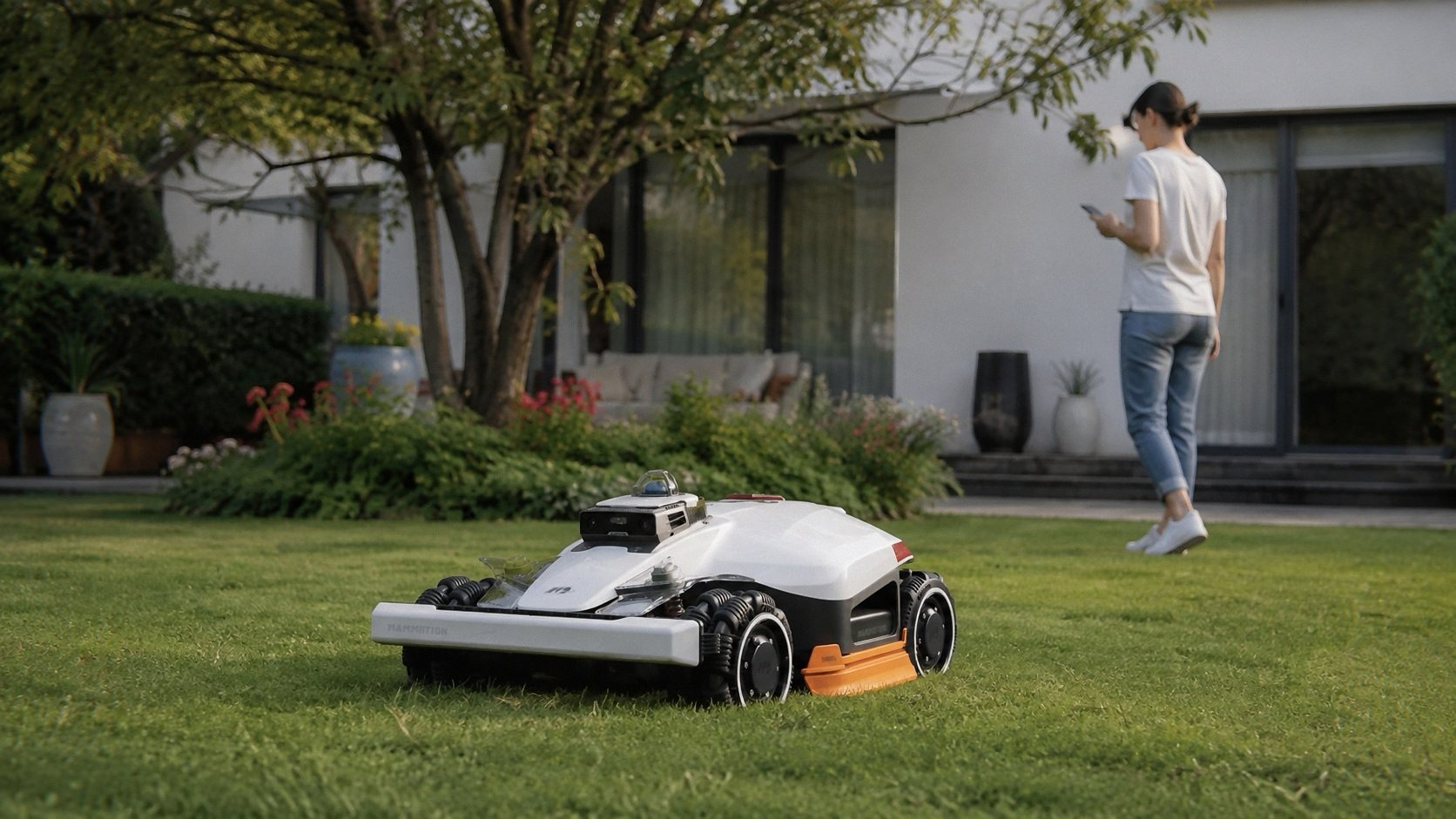
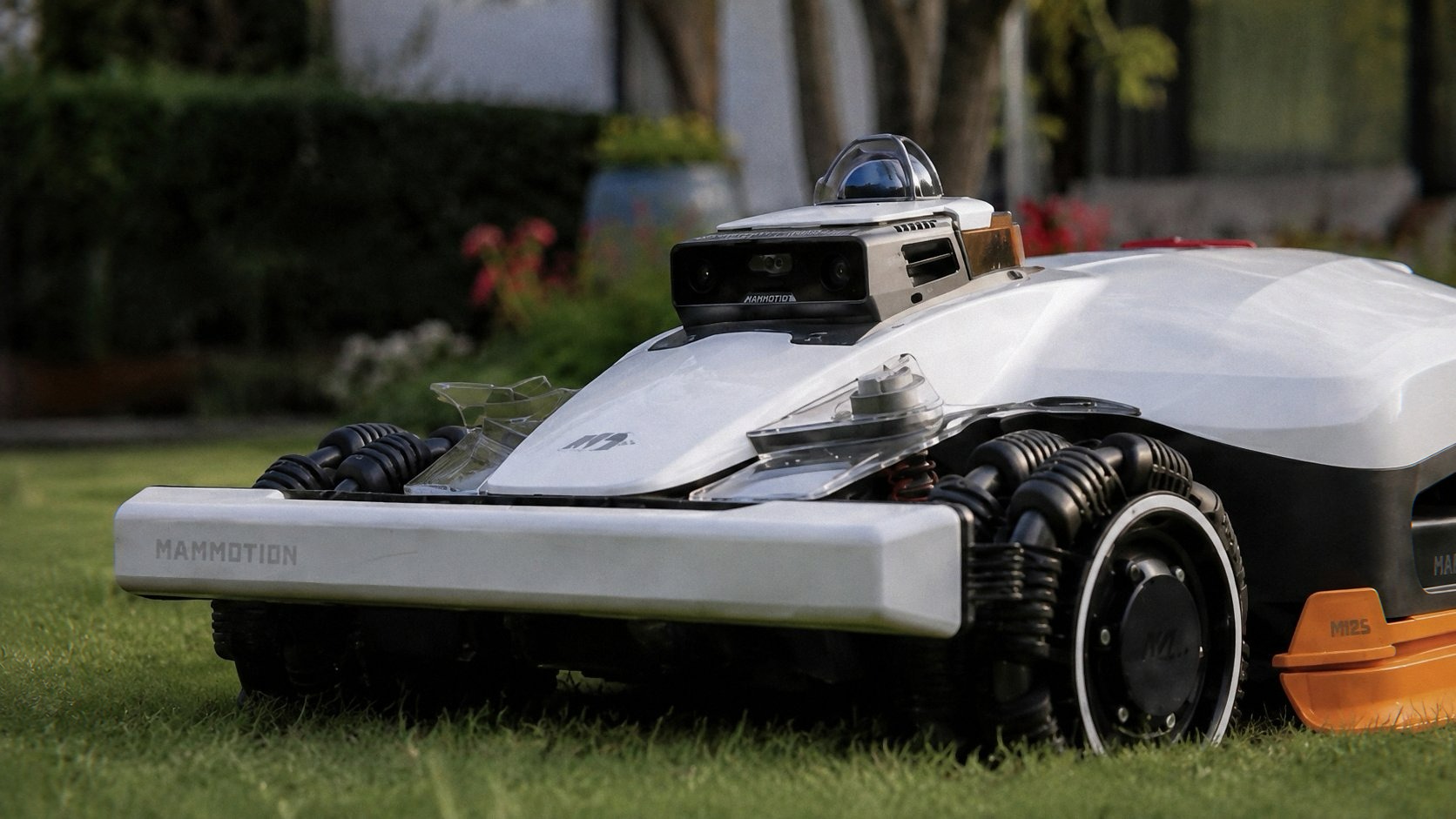
The unit itself looks like a low-rider tank. It’s got that aggressive, angular design that makes it clear this isn’t a toy. Four wheels, each with its own motor, and the whole thing sits low to the ground. The cutting deck is underneath, and the top houses the LiDAR unit that spins constantly, like a little lighthouse on wheels. It’s not pretty in a sleek, modern way — it’s pretty in a “this thing means business” way.
The Setup: No Wires, No Stakes, No Headaches
Here’s the part that sold me before I even turned it on: no boundary wires. None. Zero. The LUBA 3 uses a combination of 360° LiDAR, NetRTK (that’s real-time kinematic GPS with network corrections), and AI vision to map your yard. Setup was a matter of walking the mower around the perimeter of my lawn once, letting it record the boundary, and then marking out zones and obstacles in the app.
I’m not going to lie — the first mapping run took about 20 minutes. I walked it around the property line, dodging a few flower beds and a fire pit, and the app built a surprisingly accurate map. It even picked up the slight elevation changes and displayed them as a topographical map, which is honestly cooler than it has any right to be.
Compare that to the Husqvarna Automower iQ Series 420 iQ I tried last year, which also does wire-free via EPOS. That setup required me to set up a base station that needed a clear view of the sky, and the mapping process was way more finicky. The Mammotion app just… worked. It’s not perfect — I had to redo one corner because the mower got confused by a low-hanging branch — but for the most part, it was painless.
The app itself is where you’ll spend your time. And honestly? It’s one of the better robot mower apps I’ve used. You can set up to 30 different zones, which sounds like overkill until you realize you want to mow the front yard on Mondays, the backyard on Wednesdays, and leave the strip next to the neighbor’s fence alone because their dog hates the noise. The scheduling is granular — I’m talking specific days, times, and even mowing directions for each zone.
The Mowing: Where It Shines (and Where It Struggles) See Today’s Deal on Amazon
Let’s get to the good stuff. The LUBA 3 has a cutting height range of 2.2” to 4.0”, which is a solid range for most warm-season grasses. The 3000H in the name refers to the model’s coverage area — 3,000 square meters, which is about 0.75 acres. So it’s rated for exactly my yard size. Perfect.
The mower uses a three-blade cutting system (two fixed, one floating) that does a genuinely decent job. On flat sections, the cut is clean and even, with no visible striping unless you deliberately set the mower to mow in a specific pattern. The mulching is solid — it leaves behind fine clippings that break down quickly, and I haven’t had any thatch buildup issues in the three weeks I’ve been running it.
Now, about that AWD and the 80% slope claim. I don’t have an 80% slope — that’s basically a cliff — but I do have sections that hit around 35-40%, and the LUBA 3 handles them without breaking a sweat. The four-wheel drive means it’s not just the drive wheels doing the work; all four are pulling. I watched it climb a section of my backyard that I’ve slipped on in sneakers, and the mower just… went up. No wheel spin, no hesitation, no getting stuck. The stability is genuinely impressive.
Here’s where it gets interesting: the slope performance isn’t just about climbing. It’s about mowing quality on slopes. Most robot mowers that can climb slopes still mow poorly on them because the cutting deck shifts or the mower tilts. Not this one. The deck stays level, and the cut stays consistent even on the steep stuff. That’s a big deal if your yard is anything like mine.
The one place it struggled? Wet grass. Look, I know you’re not supposed to mow wet grass, but sometimes it rains and you get behind. The LUBA 3 handles damp grass okay, but if it’s genuinely soaked, the wheels will slip on the slick spots, and the cutting quality drops noticeably. It’s not a dealbreaker — it’s a robot, just let it run an extra day — but don’t expect miracles in a monsoon.
The Cutting Height: A Couple of Inches Make a Difference
I want to talk about the cutting height range because it’s one of those spec sheet numbers that doesn’t seem important until you actually need it. The LUBA 3 goes from 2.2” to 4.0”. That’s a 1.8-inch range, which is wider than most robot mowers offer.
Why does this matter? Because different grasses need different heights, and the same grass needs different heights in different seasons. In the spring, I keep my Bermuda at around 2.5”. In the summer heat, I bump it up to 3.5” to protect the roots. The LUBA 3 handles both without needing tools or adjustments — you just change it in the app and it adjusts automatically. The range isn’t as low as the Mammotion LUBA 3 AWD 5000 (which goes down to 1.0”), but for most people, 2.2” is plenty low enough.
The adjustment mechanism is a single motor that raises or lowers the entire deck. It’s not instant — takes about 10 seconds to go from min to max — but it’s smooth and consistent. And the mower remembers the height setting per zone, so you can have a lower cut in the front yard and a higher cut in the back.
Battery Life and Charging
The 3000H model comes with a decent battery — I’m getting about 2.5 to 3 hours of continuous mowing on a full charge. That’s enough to cover my entire 0.75 acres in one go if I’m doing a standard mow, but if the grass is overgrown or I’m doing a pattern mow, it’ll need to stop and charge.
The mower returns to the docking station automatically when the battery gets low, charges up, and then goes back out to finish. The auto-resume works well — it doesn’t re-mow areas it’s already covered, which is a nice touch. The charging time is about 2 hours, so if you’ve got a big yard, you might be looking at a two-part mow session. For me, it’s usually done in one go, but I’ve had a few times where it took a mid-mow break.
One thing to note: the docking station needs a clear view of the sky for the RTK correction signals. If your garage is under a carport or has a metal roof, you might have signal issues. I’ve got mine mounted on the side of my shed, and it works fine, but it’s worth planning your dock placement carefully.
The App and Smart Features
The Mammotion app is where this mower separates itself from the competition. It’s not just a remote control with a schedule — it’s a full lawn management system. You can:
- Set up to 30 zones with individual schedules
- Adjust cutting height per zone
- Set mowing patterns (parallel, spiral, or random)
- Create no-go zones and corridors
- Monitor the mower’s position in real-time
- Get notifications when it finishes or gets stuck
The AI vision system is what handles obstacle detection, and it’s genuinely good. I’ve got a fire pit, a couple of trees, and a garden hose that I’ve “accidentally” left out, and the mower has avoided all of them. It’s not perfect — it once got confused by a black garden hose on dark soil — but it’s significantly better than the ultrasonic sensors on older robots.
The one app feature that’s a bit underwhelming is the “AI vision” for recognizing specific objects. The marketing makes it sound like it can identify your dog and avoid it. In practice, it just slows down and stops if something is in its path. It’s not a smart as advertised, but it’s good enough that I haven’t had to rescue it from a stuck situation yet.
The Garage: Finally, a Home for Your Robot See Today’s Deal on Amazon
The garage that ships separately is actually a nice addition. It’s a weatherproof enclosure that the mower docks into, protecting it from rain, snow, and UV damage. The mower is rated IPX6, which means it can handle rain, but the garage keeps it cleaner and extends the life of the blades and battery.
Installation is straightforward — it’s essentially a slightly larger box that the docking station slides into, with a door that the mower drives through. It has its own power connection, so you just run power to the garage and plug in. The whole thing takes about 20 minutes to set up.
The only downside? It’s a bit bulky. You need a flat area roughly 4 feet by 3 feet to mount it. If you’ve got a tight space, it might not fit. But if you’ve got the room, it’s worth having, especially if you live somewhere with real winter weather.
Comparing to the Competition
I’ve tested a handful of robot mowers at this price point, and the comparison is worth making. The Segway Navimow X430 is a close competitor — it has similar specs, similar price, and similar wire-free tech. The Segway has a slightly better obstacle avoidance system, honestly, but the Mammotion has better app integration and more zones.
The Husqvarna Automower iQ Series is the premium option, but you’re paying a hefty premium for the brand name. The 420 iQ covers a similar area but costs significantly more, and the app is less intuitive. The Husqvarna does have a 4-year warranty on the 410iQ model, which is better than the Mammotion’s 2-year, but the Mammotion is easier to live with day-to-day.
And if you’re coming from a traditional mower, the WORX Cordless Lawn Mower is a solid budget option, but it’s a completely different experience — you’re still pushing it. The whole point of the LUBA 3 is that you don’t touch a mower again.
The Price Question
At $2,448, this isn’t an impulse buy. But let’s do the math: a lawn service on a 0.75-acre lot runs $40-$60 per visit, and you need them weekly during growing season. That’s $160-$240 a month, or roughly $800-$1,200 for a 5-month growing season. The LUBA 3 pays for itself in 2-3 years, and it lasts longer than that.
The caveat is that you need to be okay with the quirks. The app is good but not perfect, the mower occasionally needs rescuing from unexpected obstacles, and the setup takes a solid afternoon. If you’re the type who just wants to set it and forget it, you might get annoyed. If you’re willing to spend an hour or two fine-tuning it in the first week, it’ll run like a champ for years.
The Minor Annoyances
I promised you quirks, so here they are:
-
The noise: It’s not whisper-quiet. It’s got a whirring sound that’s noticeable from about 30 feet away. It’s not as loud as a gas mower, but it’s not invisible either.
-
The app can be finicky: I’ve had it drop connection a few times, and once it failed to sync a schedule update. The fix was just restarting the app, but it’s annoying.
-
The blades are expensive: Replacement blades are about $20 each, and you’ll need to replace them every 3-4 months depending on how much you mow. The mower does come with two sets, so you’re covered for the first season.
-
The RTK signal can drop: If you have a heavily wooded yard or a lot of tall structures, the RTK correction signal can occasionally drop out. The mower will stop and wait for it to come back, which can be annoying if you’re trying to mow on a schedule.
If you pick one up through the links here, I might get a small cut — doesn’t cost you extra and it helps keep the lights on.
The Verdict: Should You Buy It? See Today’s Deal on Amazon
The Mammotion LUBA 3 AWD 3000H is the best wire-free robot mower I’ve tested for the price. It handles slopes better than anything in its class, the app is genuinely useful, and the wire-free setup is a game-changer for anyone who’s spent a weekend burying boundary wire.
The 4.4-star rating on Amazon with 30 reviews is about right. It’s not perfect — the wet grass performance is mediocre, the app has occasional hiccups, and the garage shipping separately is a minor hassle — but the core experience is solid. If you’ve got a sloped yard up to 0.75 acres and you’re tired of mowing, this is the mower to get.
Just don’t expect it to be magic. It’s a tool, and like any good tool, it needs you to learn how to use it. But once you do — and the first week is the steepest learning curve — you’ll wonder why you didn’t ditch the push mower years ago. The neighbor’s Husqvarna can stay parked in their yard. This one’s actually earning its keep at mine.