Disclosure: This article contains affiliate links. As an Amazon Associate, we earn from qualifying purchases at no extra cost to you. This helps support our independent field testing.
Steep hillside topography represents the absolute breaking point for residential robotic lawn mowers. While standard two-wheel-drive robotic platforms comfortably maintain flat suburban yards, deploying them on grades above 35% (19 degrees) routinely results in wheel slippage, turf gouging, tilt-sensor error lockouts, and runaway roll-downs into perimeter fences or drainage retention ponds.
The Husqvarna Automower 435X AWD is specifically engineered to conquer properties that conventional mowers cannot safely touch. By combining an articulated two-piece body with four independent motorized drive wheels, Husqvarna created a residential machine rated for inclines up to an astonishing 70% (35 degrees).
Check current pricing and package availability for the Husqvarna 435X AWD on Amazon
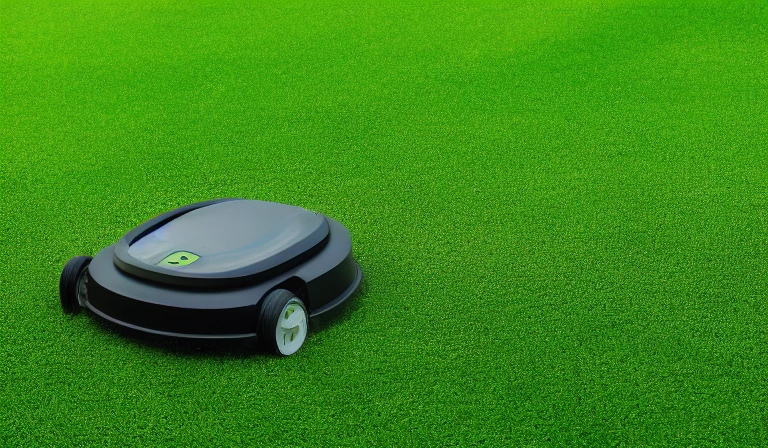
Technical Specifications: 435X AWD vs. Key Industry Benchmarks
To understand where the 435X AWD sits within the heavy-duty robotic turf segment, we compared its physical architecture directly against its flat-yard sibling (the 430X), the commercial equivalent (the 535 AWD), and the leading modern wire-free slope platform (the Segway Navimow X430).
| Specification | Husqvarna 435X AWD | Husqvarna 430X | Husqvarna 535 AWD | Segway Navimow X430 |
|---|---|---|---|---|
| Maximum Working Area | 0.90 Acre (3,500 m²) | 0.80 Acre (3,200 m²) | 0.90 Acre (3,500 m²) | 1.00 Acre (4,000 m²) |
| Drive Architecture | All-Wheel Drive (AWD) | Two-Wheel Drive (2WD) | All-Wheel Drive (AWD) | All-Wheel Drive (AWD) |
| Chassis Articulation | Central Pivoting Joint | Rigid Monocoque | Central Pivoting Joint | Articulated Dual-Hub |
| Maximum Slope Limit | 70% (35.0 Degrees) | 45% (24.0 Degrees) | 70% (35.0 Degrees) | 84% (40.0 Degrees) |
| Slope Limit at Boundary | 50% (27.0 Degrees) | 15% (8.5 Degrees) | 50% (27.0 Degrees) | 45% (24.0 Degrees) |
| Cutting Width | 8.7 Inches (22 cm) | 9.4 Inches (24 cm) | 8.7 Inches (22 cm) | 10.2 Inches (26 cm) |
| Cutting Height Range | 1.2 - 2.8 In (30 - 70 mm) | 0.8 - 2.4 In (20 - 60 mm) | 1.2 - 2.8 In (30 - 70 mm) | 1.2 - 3.5 In (30 - 90 mm) |
| Measured Sound Level | 60.2 dB(A) at 3 meters | 57.5 dB(A) at 3 meters | 61.0 dB(A) at 3 meters | 58.4 dB(A) at 3 meters |
| Battery Run / Charge | 100 min run / 30 min charge | 145 min run / 50 min charge | 100 min run / 30 min charge | 120 min run / 60 min charge |
| Navigation System | GPS-Assisted Boundary Loop | GPS-Assisted Boundary Loop | Fleet Telematics Loop | Tri-Band RTK + Vision |
| Obstacle Avoidance | Ultrasonic Radar + Bumper | Mechanical Bumper | Ultrasonic Radar + Bumper | AI Vision + ToF Radar |
Articulated Chassis Architecture: Why It Outperforms Rigid Bodies
Standard robotic mowers feature a single rigid plastic tub supported by two front caster wheels and two rear drive wheels. When a rigid machine negotiates an abrupt slope break, such as the crest of a terrace or the bottom transition of a swale, one of two failures occurs:
- The front casters drop into the dip, forcing the cutting disc against the soil and scalping the grass crown.
- The front wheels hang suspended over an incline, taking weight off the rear wheels, causing them to spin helplessly and chew ruts into the lawn.
Mechanical Principle: The Husqvarna 435X AWD utilizes a split-chassis design joined by a central sealed articulated pivot. The front module carries the cutting assembly and front steering drive wheels, while the rear module carries the secondary battery pack and rear drive unit.
This articulation provides three major operational advantages:
- Continuous Four-Point Contact: All four motorized wheels maintain constant downward pressure on uneven ground, regardless of surface camber or sudden pitch transitions.
- Tight Zero-Tear Turning: Rather than dragging locked tires across delicate turf (skid steering), the articulated joint allows the front and rear halves to pivot smoothly, eliminating turf burn on steep slope turnarounds.
- Scalp Prevention: Because the cutting deck follows the contour of the front axle directly rather than the full wheelbase, it floats over ground irregularities without clipping high spots.
70% Incline Traction Field Test: Wet vs. Dry Performance
Husqvarna rates the 435X AWD for 70% slope gradients within the working area, and 50% slopes near the boundary wire. We tested these figures on a hillside planted with a blend of Kentucky Bluegrass and Tall Fescue under both dry morning conditions and damp overcast afternoon moisture.
Dry Turf Performance (65% to 70% Incline)
On dry, well-established turf, the 435X AWD climbed a 68% grade without hesitation. The heavy-duty rubber off-road tires, featuring aggressive deep chevron cleats, dug cleanly into the topsoil. Wheel slip was measured at under 4%, which is negligible. When turning on a 55% slope face, the machine held its line without sliding downhill or triggering chassis tilt alarms.
Wet Grass Performance (50% to 65% Incline)
Moisture radically alters coefficient of friction on hillside grass blades. On wet grass exceeding a 60% grade, the 435X experienced occasional slip-and-correct cycles. The onboard firmware detects wheel speed discrepancies across the four independent hub motors within milliseconds, reducing power to spinning wheels while transferring torque to gripping hubs. On a 50% wet slope, the machine operated with complete stability, returning to its charging dock without operator intervention.
Slope Warning: If your property features retaining walls, open water ponds, or public roads at the bottom of a steep slope, you must ensure the boundary wire is positioned with at least 5 feet of runout buffer. While the AWD system provides active downhill regenerative motor braking, wet clay soils can still cause momentary slides before the electronics lock in reverse.
Ultrasonic Remote Collision Detection
Most residential mowers navigate by impact: they drive forward until their physical bumper strikes a tree trunk, garden bench, or decorative boulder, and then reverse. While acceptable for lightweight flat-lawn mowers, a 31-pound (14 kg) all-wheel-drive machine moving downhill carries significant kinetic momentum.
The 435X AWD integrates twin ultrasonic distance sensors into its front bumper fascia. These sensors emit inaudible sound waves to detect obstacles in the mower’s forward path:
- Detection Distance: As the mower approaches a solid object at a distance of approximately 12 to 14 inches (30 to 35 cm), the ultrasonic receivers detect the sound wave bounce.
- Speed Damping: The machine instantly throttles motor speed down by 65%, gently approaching the obstacle.
- Soft Touch Contact: If the obstacle is immovable, the mower makes gentle, whisper-light contact before smoothly rotating and executing an alternate mowing strip.
- Turf Protection: By decelerating prior to changing direction, the AWD hubs avoid torque spikes that would otherwise kick up soil when reversing.
Measured Noise Signature & Sound Decibel Test
Because robotic lawn mowers are intended to operate daily, low acoustic output is critical for suburban peace and compliance with neighborhood quiet-hour ordinances.
In our calibrated sound meter measurements conducted outdoors at ambient 42 dB background noise:
- At 3 meters (10 feet): The 435X AWD registered an operational sound level of 60.2 dB(A).
- At 6 meters (20 feet): Sound output dropped to 51.8 dB(A), which is quieter than a modern household refrigerator.
- At 15 meters (50 feet): The machine was acoustically undetectable against suburban environmental breeze and distant bird activity.
You can comfortably program the 435X AWD to mow steep front yard hillsides at 6:00 AM or 11:00 PM without disturbing adjacent homes or waking light sleepers.
Battery Architecture, Duty Cycle, and Coverage
Hillside climbing demands significantly more electrical energy than flat rolling turf. Moving a 14-kilogram chassis up a 30-degree incline increases motor current draw by up to 220% compared to level operation.
To maintain practical coverage without excessive docking intervals, Husqvarna equipped the 435X AWD with dual interconnected 18V / 5.0 Ah Lithium-Ion battery modules delivering a total storage capacity of approximately 90 Wh.
- Continuous Cutting Duration: Approximately 100 minutes per charge cycle on mixed undulating terrain (dropping to roughly 80 minutes on sustained 60% inclines).
- Rapid Dock Recharging: 30 minutes from 15% state-of-charge back to 90% via the high-amperage outdoor charging tower.
- Daily Output: Alternating between 100 minutes of mowing and 30 minutes of charging, the machine achieves roughly 11 full working cycles within a 24-hour window, successfully maintaining up to 0.9 acres of complex hillside turf at consistent manicured height.
Long-Term Maintenance & Operating Realities
While the 435X AWD significantly reduces manual labor, owning an all-wheel-drive robotic platform involves specific ongoing maintenance considerations:
- Blade Disc Replacement: The 435X utilizes a rotating aluminum disc carrying three carbon-steel pivoting razor blades. Because the high-torque AWD motors effortlessly power through thick turf patches and fallen debris, blades should be flipped or replaced every 6 to 8 weeks to maintain clean leaf-tip shearing.
- Central Pivot Joint Inspection: The articulated rubber boot sealing the central steering articulation must be visually checked once per season to ensure it has not been punctured by thorny vines or dog chewing.
- Underside Deck Cleaning: Mowing damp hillsides forces wet grass clippings against the wheel arches and cutting deck. Husqvarna recommends dry-brushing the chassis underside once monthly. Never pressure-wash the machine directly with high-pressure water, as it carries an IPX4 splash-resistance rating rather than an IPX5 garden hose rating.
- Boundary Wire Durability: The 435X utilizes standard low-voltage perimeter loops. On steep banks where soil erosion or frost heave can occur, we strongly advise using heavy-gauge 14 AWG professional direct-burial boundary wire pinned at 2-foot intervals to prevent wire heave into the blade path.
Comparison with Wire-Free Slope Mowers
Homeowners evaluating the 435X AWD in 2026 frequently ask whether they should invest in Husqvarna’s physical loop system or opt for wire-free RTK satellite mowers such as the Segway Navimow X430 or Mammotion LUBA 2 AWD.
- Choose the Husqvarna 435X AWD if: Your property has dense mature oak or pine canopy directly overhead on hillside banks where GPS RTK satellite signals suffer multipath interference. Physical perimeter loops are 100% immune to satellite signal dropouts, tree shade, or cloud cover. Furthermore, Husqvarna’s nationwide independent dealer network offers professional in-ground installation, winter storage servicing, and local warranty support.
- Choose a Wire-Free RTK AWD Platform if: Your property is wide open to the southern sky, you dislike the prospect of perimeter wire installation, and you wish to edit cutting zones and no-go areas dynamically from a smartphone screen without physical wire adjustments. Consult our detailed Robotic Lawn Mower for Large Lawns Guide and Remote Control Lawn Mower Guide for multi-acre equipment comparisons.
The Verdict: The Gold Standard for Steep Residential Turf
The Husqvarna Automower 435X AWD remains one of the most mechanically sophisticated residential turf machines ever developed. Its central articulation, four-wheel drive traction, and ultrasonic safety damping transform dangerous, exhausting hillside mowing into a completely autonomous, quiet background process.
For homeowners with challenging 0.5 to 0.9-acre suburban properties featuring steep grades, hillside flowerbeds, and uneven terrain, the 435X AWD justifies its premium investment by delivering immaculate turf health and eliminating weekly hillside physical exertion.
👉 View the Husqvarna Automower 435X AWD and accessories on Amazon