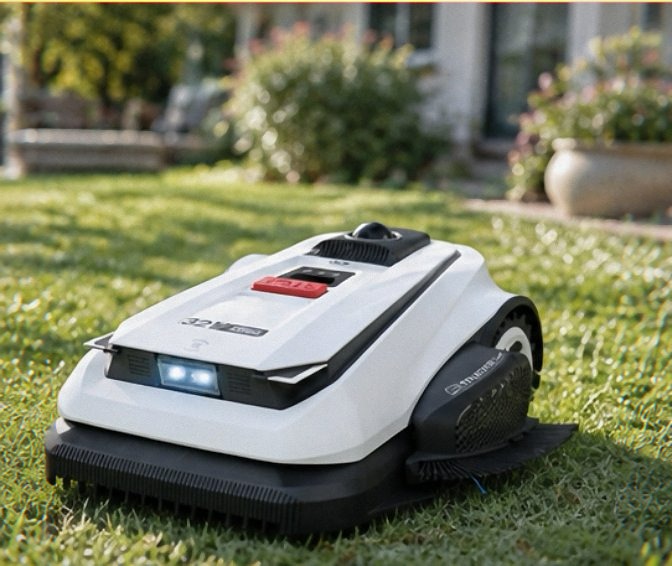
I’ve been looking at the ECOVACS Goat A2000 LiDAR PRO specs, and the first thing that stands out is what’s missing: a boundary wire. This is a robot lawn mower that uses dual LiDAR to map and navigate a yard instead of relying on a perimeter cable you bury by hand. ECOVACS positions it near the top of its Goat line, and at $1,999.99 on the current listing, it’s priced like a premium machine. The question I want to answer here is whether the A2000 LiDAR PRO earns that price for the way you’ll actually use it, or whether the cheaper wire-based mowers still make more sense for most yards.
Contents
- What Dual LiDAR Actually Changes
- Yard Size, Slope and Cutting Height
- Setup and App Control
- How It Compares to Wire-Based Mowers
- The Honest Downsides of LiDAR Mowing
- Who Should Buy the Goat A2000 LiDAR PRO
What Dual LiDAR Actually Changes
Most robot mowers still navigate by following a boundary wire you install around the lawn, plus a guide wire back to the dock. The Goat A2000 LiDAR PRO drops that. Dual LiDAR sensors scan the surroundings to build a map of the yard and to detect obstacles in the mower’s path, so the machine figures out where the lawn edges are from what it can see rather than from a cable.
That has two consequences worth thinking about. The first is installation. With a wired mower, you spend a weekend (or pay someone) to lay cable around the perimeter, around beds, and along a path to the charging station. With LiDAR, there’s no cable to bury, which is the single biggest reason people move to this class of mower. The second is flexibility. If you change the shape of a bed or add a patio, a wired mower needs the wire moved. A LiDAR mower lets you redraw the zone in the app.
The trade-off is that LiDAR reads the world by line of sight. It sees solid objects well, but it can’t see through a hedge or around a corner the way a wire can define an invisible boundary. So the quality of the map depends on how visible your lawn’s edges are.
Why dual sensors instead of one See Today’s Deal on Amazon
A single LiDAR head gives you a flat scan of one plane. Two sensors give the mower more depth information, which helps it judge height and distance to objects rather than just their direction. In practice that should mean better obstacle handling around things like garden furniture, low branches, and steps. I’d treat the “dual” part as a refinement rather than a category change: it’s the same no-wire idea, done with more data.
Yard Size, Slope and Cutting Height
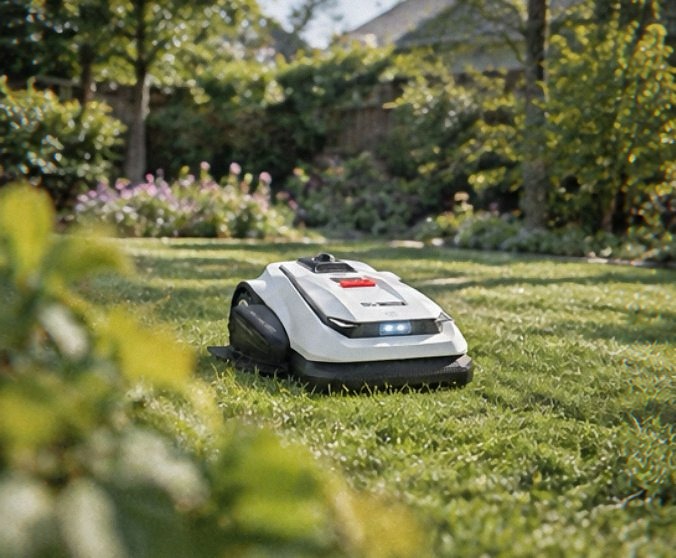
ECOVACS sells the Goat line in several sizes, and the A2000 name points to the larger end of the range. I can’t give you a verified square-metre figure for this exact model from the information I have, so check the current listing for the rated lawn area before you buy. What matters more is the shape of your yard.
LiDAR mowers do best on open, relatively uncluttered lawns with clear edges. They do worse on tight, fragmented yards with many narrow passages between beds, because every transition is another thing the map has to get right. If your lawn is one big rectangle behind the house, this class of mower suits it. If it’s a patchwork of strips separated by fences and hedges, a wired mower’s fixed zones are often more reliable.
Slope handling is the other number to verify. Robot mowers vary a lot in how steep a grade they’ll climb without slipping, and that limit is usually stated in degrees. Steep banks are where a no-wire mower can struggle, both for traction and because the mower has to keep its sensors pointed at recognizable features while climbing. Check the rated slope for this model against your worst hill.
Cutting height adjustment is standard on machines in this price band, and you’ll want a range that covers your grass type. Fine lawns cut short; rougher grass needs a higher setting. The app usually controls this, which means the mower’s real flexibility lives in software as much as hardware.

Setup and App Control
Setup on a LiDAR mower is mostly a mapping exercise. You place the charging station, let the mower do an initial scan, then use the app to define zones, no-go areas and schedules. That first mapping run is where the machine either impresses you or doesn’t: if it reads your yard cleanly, everything after is easy; if it keeps misreading an edge, you’ll be correcting it.
The app is where you’ll spend your time with the Goat A2000 LiDAR PRO. Zone management, schedules, cutting height, and manual control all route through it, which makes a stable phone connection and a well-built app genuinely important. ECOVACS has shipped robot vacuums and other home robots for years, so the software side isn’t new to the company, but lawn mapping is a different problem from indoor navigation and the app experience is worth checking before you commit.
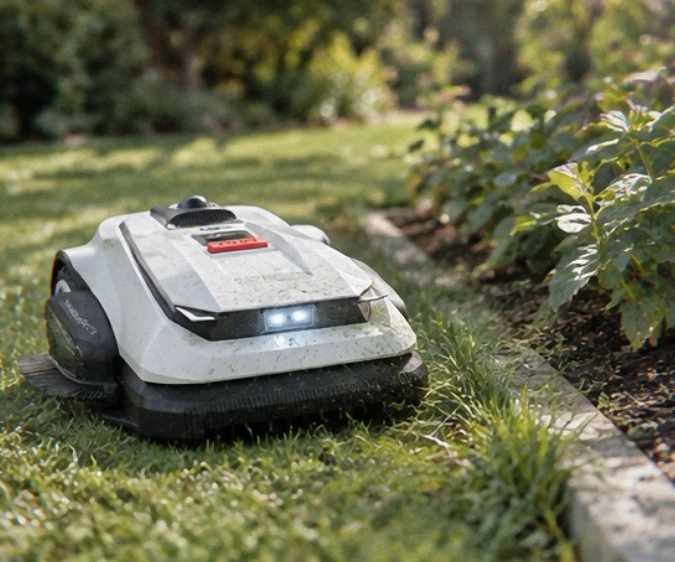
There’s also the matter of keeping the sensors clean. LiDAR heads are optical, so dust, grass clippings and mud on the lens degrade their readings. A quick wipe is part of ownership. That’s a small chore, but it’s a real one on any LiDAR mower, not just this one.
If you buy through a link on this page I may earn a small commission. It does not change what you pay.
How It Compares to Wire-Based Mowers
The clearest comparison is against wire-based robot mowers that cost considerably less. Husqvarna’s Automower line is the best-known example of the wired approach, and it’s a useful reference point for the trade-off even without quoting exact figures for a specific model. The difference isn’t really about cutting quality. Both classes cut grass. It’s about how the mower knows where the lawn is.
| Feature | Goat A2000 LiDAR PRO | Typical wire-based mower |
|---|---|---|
| Boundary definition | LiDAR map, no cable | Buried perimeter wire |
| Installation effort | Mapping run in app | Lay and bury wire |
| Yard changes | Redraw zones in app | Re-route the wire |
| Best-suited yards | Open, clearly edged lawns | Complex, fragmented lawns |
The pattern is consistent: no-wire mowers save you installation and give you flexibility, and wired mowers save you money and handle awkward yards with more predictability. Neither is universally better. It comes down to which cost you’d rather pay, in cash or in a weekend with a spade.
You can see the current price on Amazon if you want to weigh the gap for yourself.
The Honest Downsides of LiDAR Mowing
The price is the obvious one. At $1,999.99, the Goat A2000 LiDAR PRO costs substantially more than a capable wired mower, and the premium buys convenience and flexibility rather than a better cut. If your main goal is simply to stop mowing, a cheaper wired machine does that job.
LiDAR has failure modes a wire doesn’t. It can be confused by reflective surfaces, by sudden changes in the yard, or by edges that aren’t visually distinct. A wire is dumb but it never misreads a boundary. If you have a low tolerance for occasional mapping corrections, this class of mower will test it.
Then there’s the app dependency. Everything from schedules to zone changes runs through ECOVACS’ software, so you’re trusting the company to keep that app working well over the years you own the mower. That’s true of most modern robot mowers, but it’s worth saying plainly.
None of these are dealbreakers for the right buyer. They are the honest costs of choosing no-wire mowing, and you should go in knowing them.
Who Should Buy the Goat A2000 LiDAR PRO
The A2000 LiDAR PRO makes sense for one specific person: someone with a fairly open lawn, clear edges, no appetite for burying wire, and a budget that comfortably absorbs a two-thousand-dollar mower. For that buyer, the no-cable setup and the flexibility to redraw zones in an app are worth the premium, and the dual LiDAR should give it a more confident read of obstacles than a single-sensor design.
If your yard is small, heavily sectioned, or full of tight passages, spend less on a wired mower and put the savings elsewhere. The wire is more work up front, but it handles awkward layouts more predictably.See Today’s Deal on Amazon
Before ordering, check three things on the listing: the rated lawn area for this exact model, the maximum slope it’s rated to climb, and how the app handles zone editing. Those three numbers and behaviours decide whether the A2000 LiDAR PRO fits your yard far more than the sensor count does.