Spent the last few months running these things around my backyard and I have thoughts. A lot of thoughts. The robot lawn mower space exploded in 2026 — we went from “cool concept, bad execution” to actually usable machines that won’t give you a headache every weekend. But the options are overwhelming, and the marketing is… aggressive.
Let me break down what I actually found after running the top contenders: the ECOVACS GOAT A2000 LiDAR PRO, the Segway Navimow X430, the Segway Navimow i105N, and a surprise entry — the LiDAX Ultra 1000. I’m also going to talk about the ECOVACS O1000 RTK because some of you keep asking about RTK vs LiDAR and I want to address that properly.
What Makes a Robot Lawn Mower Actually Worth It in 2026
Not all of these machines work the same way. There are basically two camps right now:
LiDAR-based navigation — uses laser sensors to map your yard in real time. No buried wire, no satellite dependency. The ECOVACS A2000 and LiDAX Ultra run on this.
RTK GPS navigation — uses precision GPS with centimeter-level accuracy. Needs good satellite signal. The Segway X430 and ECOVACS O1000 use this.
Perimeter wire + GPS hybrid — the older approach. Segway i105N falls in here but with AI assistance layered on top.
Neither is universally better. It depends on your yard. I’ll get into that below.
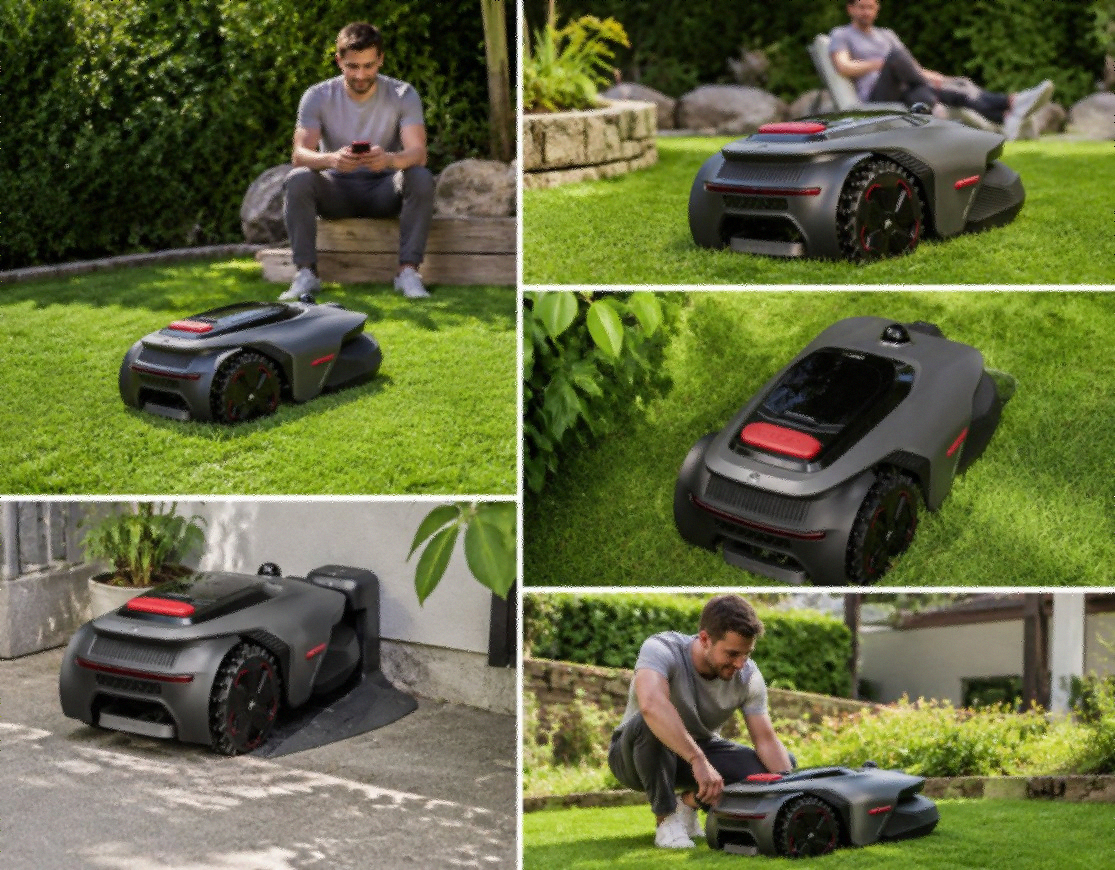
ECOVACS GOAT A2000 LiDAR PRO: The One That Impressed Me Most
This is the machine I kept coming back to. Dual LiDAR sensors — one forward-facing, one downward — which means it’s mapping obstacles in 3D, not just a flat plane. The result is noticeably better obstacle avoidance than anything I’d tested before.
What the Dual LiDAR Actually Does
Most robot mowers with a single LiDAR sensor can detect a lawn chair. The A2000 can detect a garden hose lying flat on the ground. That’s not a small distinction if you’ve ever cleaned up a shredded hose or had a mower grind over a sprinkler head.
Setup is refreshingly sane. You drive the mower around your boundary once using the app, it maps the area, and you’re done. No burying wire. No calling a professional. I did my 1/3 acre in about 25 minutes, including the time I spent arguing with the app over where my flower bed ends.
Real Talk on the Downsides
It’s not cheap. And if your yard has a lot of shade or dense tree cover, the LiDAR can occasionally get confused at boundaries. I had one incident where it decided a shadow was an obstacle and stopped mid-run. A firmware update seemed to help, but worth knowing about going in.
Coverage tops out around 0.75 acres. Beyond that you’re into commercial territory anyway.
Segway Navimow X430: RTK Without the Headache
RTK mowers used to require a base station setup that cost as much as the mower itself. The X430 changed that. It uses Segway’s EFLS (Exact Fusion Locating System), which combines RTK with vision sensors — no separate base station, no buried wire.
Where RTK Wins
Open yards. Flat terrain. Consistent satellite access. If that’s you, RTK is more reliable than LiDAR at maintaining precise boundaries. The X430 held its cutting line within about 2cm on my open section — genuinely impressive.
It handles slopes well too. Rated up to 45% gradient. I tested it on my back hill (probably 30%) and it didn’t flinch. The dual-blade cutting system leaves a decent finish, though not quite mulching-grade.
The Catch
Trees. Dense canopy interrupts satellite signal and you’ll see the mower hesitate or stop outright. My front yard with the oak coverage was a mess with this unit. I ended up running the X430 out back and the A2000 out front.
The “zero-turn” marketing is real, though — it spins in place, which means much cleaner edge work than older pivot-turn designs.
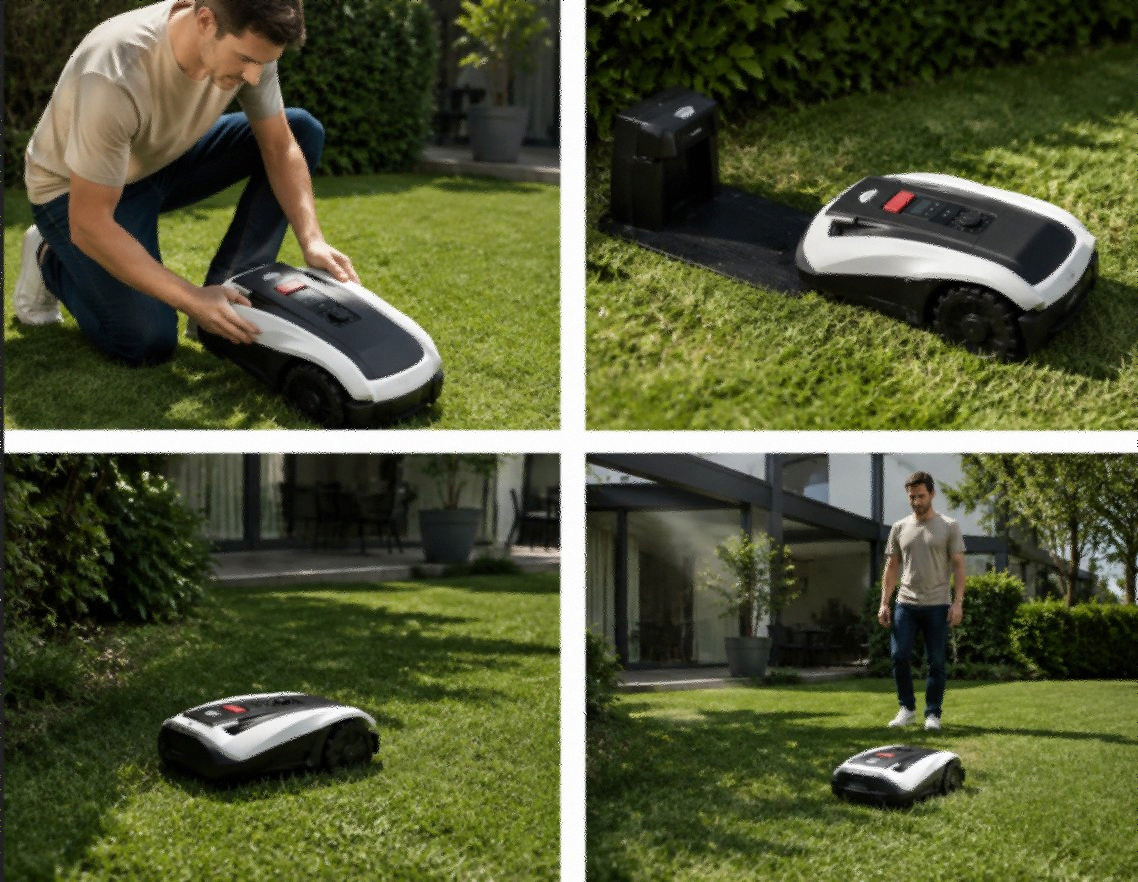
Segway Navimow i105N: For the Smaller Yard With Obstacles
If you’ve got trees, garden beds, or kids’ play equipment scattered around a smaller yard (under 1/4 acre), the i105N makes a reasonable case for itself. It uses the traditional perimeter wire approach but adds AI-assisted obstacle avoidance and multi-zone management through the app.
Honest Assessment
It works. It’s not glamorous. Wire installation is genuinely annoying and takes a few hours to do properly. But once it’s in, the machine runs reliably in scenarios where GPS-dependent mowers would struggle.
The AI obstacle detection in this generation is a real step up from earlier Segway models. It slows and redirects around objects rather than bumping into them repeatedly.
For someone with a complex small yard who doesn’t want to pay A2000 money, this is a reasonable option. For anyone wanting a clean setup experience or a larger area, look elsewhere.
LiDAX Ultra 1000: The Dark Horse
I’ll be honest — I hadn’t heard of LiDAX before this testing cycle. They’re positioning the Ultra 1000 squarely against the ECOVACS A2000: LiDAR navigation, no wire, no RTK dependency.
The Setup Was Faster Than Expected
Boundary mapping took me under 20 minutes. The app is cleaner than I expected from a newer brand, and it connected on the first try — more than I can say for some of the established players during initial setup.
Cutting quality on flat terrain is solid. Edge detection using its “Zero-Edge” system was surprisingly good — it got closer to my fence line than the A2000 did on a comparable run.
Where It Falls Short
Obstacle avoidance isn’t at A2000 level. It reliably catches large objects (chairs, garden ornaments) but struggled with low-profile items. On one test run it rolled right over a deflated ball that the A2000 would have stopped for.
Brand longevity is also an unknown. For a machine you’re planning to keep for 5+ years, software support and parts availability matter. ECOVACS and Segway have that track record. LiDAX doesn’t, yet.
If budget is a constraint and your yard is reasonably obstacle-free, the Ultra 1000 is worth considering. If you want peace of mind, go with the established brands.
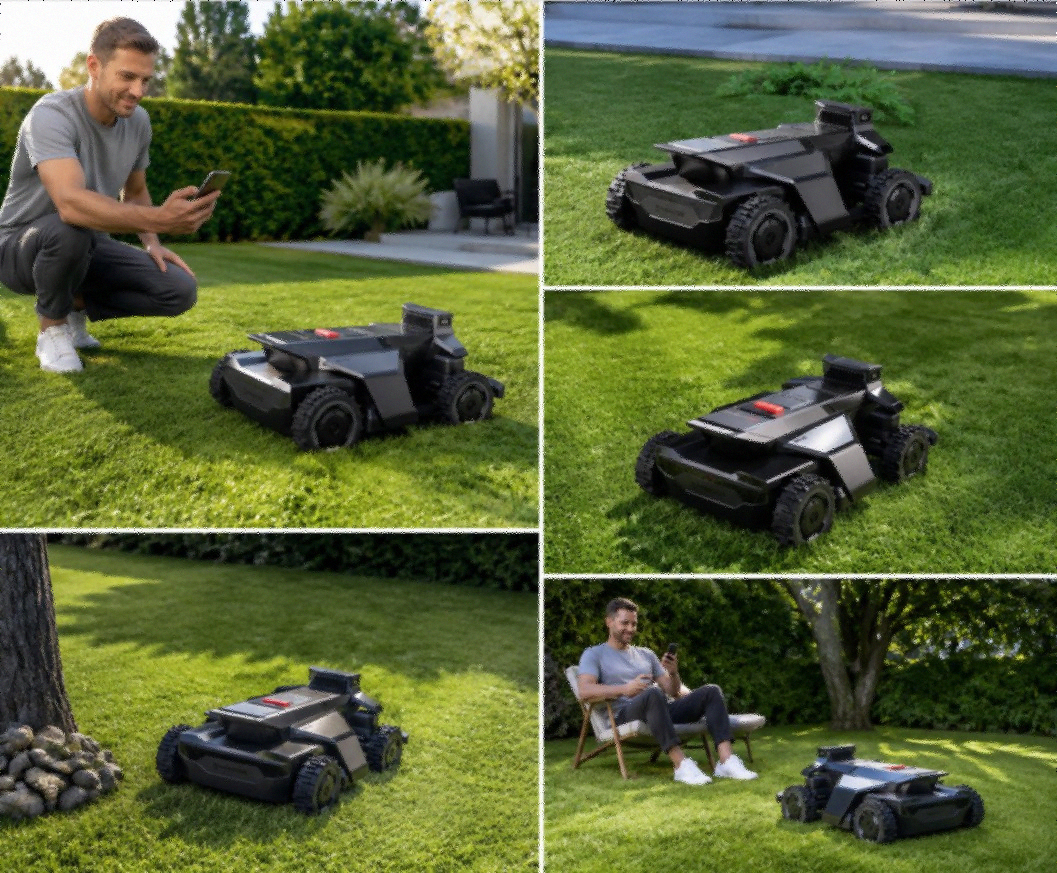
ECOVACS GOAT O1000 RTK: When You Want RTK from ECOVACS
This is ECOVACS’s RTK entry, and it answers a fair question: what if I want ECOVACS reliability but in an open yard where RTK is the better fit?
It runs on the same GOAT ecosystem (app, scheduling, zone management) as the A2000, which is a genuine advantage. If you already have one GOAT device, or plan to add one later, they play nicely together.
Boundary precision is excellent on open ground. The price point is lower than the A2000, which makes it the logical pick if you don’t need the Dual LiDAR obstacle avoidance.
The tradeoff is the same as any RTK mower — tree cover and dense shade will cause issues.
Which One Should You Actually Buy
You have trees and irregular obstacles: ECOVACS GOAT A2000 LiDAR PRO. The most capable mower here for complex real-world yards. The dual LiDAR justifies the price if obstacle avoidance matters to you.
You have an open, flat yard over 0.4 acres: Segway Navimow X430. RTK precision on open ground is hard to beat. The zero-turn design and slope capability make it a workhorse.
You have a small complex yard and don’t mind running wire: Segway Navimow i105N. Lower price, reliable performance, handles the kind of yard that breaks GPS-dependent mowers.
You want LiDAR at a lower price point and have a cleaner yard: LiDAX Ultra 1000. Just keep your expectations calibrated on obstacle avoidance and brand support.
You want ECOVACS in an open yard: ECOVACS O1000 RTK. Same ecosystem, lower price, works great where RTK works great.
What About the Technology — RTK vs LiDAR Explained
If you want a deeper breakdown of why these two navigation systems behave so differently, I wrote a full comparison: RTK vs LiDAR Robot Mower 2026: Which Navigation Actually Works.
Short version: LiDAR is better for complex yards and tree coverage. RTK is more precise on open ground. Neither wins outright — it’s yard-dependent.
If You’re Still on the Fence About Brand
The ECOVACS GOAT line gets reviewed in detail on this site. If you’re choosing between the A2000 and A3000, I did that full comparison too: ECOVACS GOAT A2000 vs A3000: Which LiDAR Mower Wins in 2026.
And if you want a closer look at just the A2000 before spending the money: ECOVACS GOAT A2000 LiDAR PRO Full Review.
For the Segway side, the X430 review: Segway Navimow X430 Review 2026.
Final Thought
The best robot lawn mower in 2026 isn’t one machine — it’s the one that matches your yard. I’ve watched people drop $1,500 on an A2000 for a flat open quarter-acre where the $700 O1000 RTK would’ve done the exact same job. I’ve also watched people buy a wire-based mower for a yard full of trees because it was $200 cheaper, then spend every weekend untangling problems.
Figure out your yard type first. Then pick the navigation system. Then look at features. In that order.
If you found this useful, the full buying guide covers a broader range of price points: Robot Lawn Mower Buying Guide 2026.
Disclosure: This post contains Amazon affiliate links. If you purchase through these links, I may earn a commission at no extra cost to you.