I bought the WORX WR310 because I was sick of edging around a buried wire. My old Husqvarna needed a perimeter loop trenched into the grass, and every time a mole pushed up a run of it, the mower would chew through the signal and sit there blinking like it forgot its own name. So when WORX said this thing mows without any boundary wire, I clicked buy at $999.70 and told myself the setup would be worth it.
It mostly is. Mostly.
Contents
- Setting Up the WR310 Without a Wire
- How It Actually Cuts a Quarter Acre
- The Rain Sensor and the Wet Grass Problem
- Noise, Wheels, and What the Neighbors Hear
- Blades, Docking, and the Maintenance Grind
- How It Stacks Up Against the Husqvarna 410iQ
- Who Should Buy the WR310
Setting Up the WR310 Without a Wire
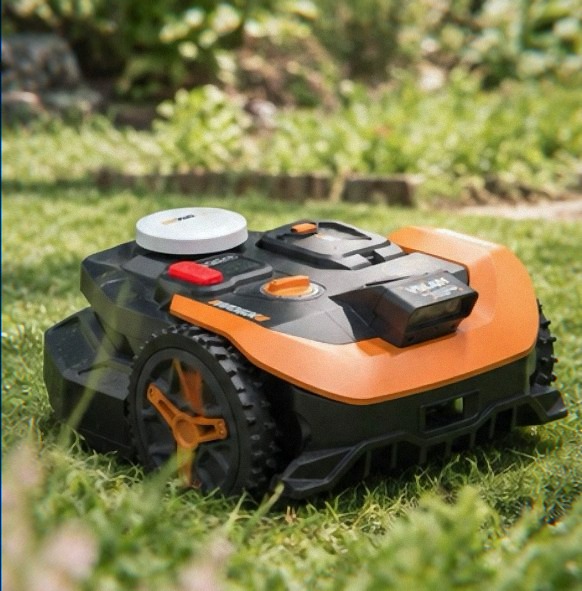
The box showed up on a Tuesday and I had it unboxed on the driveway by four. First thing I noticed: the thing is heavier than it looks in photos. Not back-breaking, but you’re not tossing it over your shoulder either. The body is a matte gray-green plastic that already had a faint molding seam running down one side, which bugged me more than it should have for a grand.
The no-wire claim is real, but it’s not magic. You still have to map your yard. You drive it around the perimeter manually using the app like a remote control car, and it builds a GPS map of the lawn. Sounds cool. In practice, my first pass took almost forty minutes because the mower kept drifting near my fence line where the GPS signal bounced off the metal posts. The app would flash a weak-signal warning and I’d have to back up and redo a stretch. My neighbor watched the whole thing from his porch with a beer. I don’t think he was impressed.
Second attempt went smoother once I learned to keep the mower away from the house wall. Third attempt nailed it. So budget an afternoon, not twenty minutes.
Here’s the affiliate bit: if you buy through a link here, I may earn a small commission. Doesn’t change your price. You can grab it here on Amazon.
How It Actually Cuts a Quarter Acre
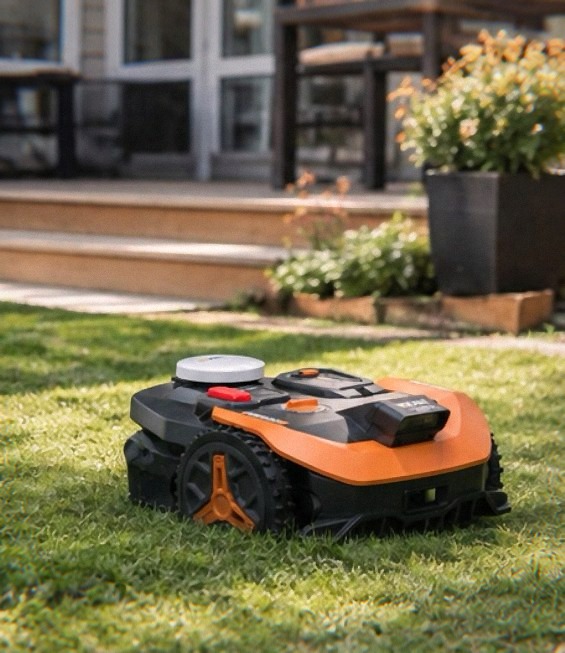
My lot is right around a quarter acre of actual grass, minus the house footprint and the driveway. The WR310 handles it, but it’s not a one-and-done machine. It runs in cycles. It’ll head out, cut for a while, come back to charge, head back out. On a full day of good weather I’ll see it make three or four passes. By evening the lawn looks even, but it’s a slow burn, not a single dramatic mow.
 What surprised me is how well it handles the slope near my back fence. That’s maybe a twenty-degree grade and it never once slipped or stalled. It just tilts and keeps crawling. The cut quality on regular bluegrass is fine. Not golf-course fine, but fine. If you let the grass get shaggy before the first run, though, it’ll leave stragglers. This is a maintenance mower, not a rescue mower. Keep it on a schedule and it keeps up. Skip a week and you’ll be out there with the push mower finishing what it missed.
The Rain Sensor and the Wet Grass Problem
The rain sensor works. Maybe too well. It caught a light drizzle one morning that barely wet the sidewalk and parked itself for the rest of the day. I get it, wet grass clumps and clogs, but I stood at the window watching perfectly mowable weather go to waste. There’s an override in the app if you want to force it out, which I’ve used more than once.
Wet grass itself is a real problem for this mower. When the blades get gummed up with damp clippings, the cut goes ragged and you can hear the motor working harder, a lower hum that sounds almost strained. I’ve learned to just let it skip wet days. Fighting it isn’t worth the cleanup.
Noise, Wheels, and What the Neighbors Hear
It’s quieter than a gas mower by a mile, but it’s not silent. There’s a steady electric whine from the blade motor and a plasticky rattle from the wheels when it rolls over uneven ground. My wife says it sounds like a very determined Roomba. I can hear it from inside the house with the windows closed if I’m listening for it. It won’t wake anybody up, but if you’re planning to run it at 6 AM, your neighbors will know.
The wheels leave faint tracks in dewy grass. Not ruts, just little pressed lines that fade by mid-morning. One weird thing: the front caster wheel squeaks after about three weeks of use. I hit it with a shot of silicone spray and it shut up, but I shouldn’t have to do that on a thousand-dollar machine.
Blades, Docking, and the Maintenance Grind
The blades are these tiny razor discs that need replacing every couple months depending on how much you mow. They’re cheap and swapping them takes five minutes with a screwdriver. Fine. What I don’t love is flipping the mower over to do it. There’s no service position, no prop, nothing. You just heave it onto its back on the driveway and hope you don’t crack the housing. I’ve started doing it on a folded towel.
Docking is reliable about ninety percent of the time. Every so often it overshoots the charging contacts by an inch and sits there nudging forward and back like it’s trying to parallel park. Usually a second attempt fixes it. Once, it just gave up and died in the middle of the lawn, and I had to carry it back. That was a bad morning.
The charging base itself is light and slides around on my patio pavers if the mower bumps it hard. I ended up putting a couple of paver stones on the base’s feet to hold it in place. Not elegant, but it works.
How It Stacks Up Against the Husqvarna 410iQ
I looked hard at the Husqvarna 410iQ ½ Acre Wire-Free before I bought the WORX. The Husqvarna handles twice the acreage and steeper slopes, and by most accounts its GPS navigation is more polished. But it also costs noticeably more, and for my quarter acre the extra coverage would’ve been wasted money. If you’ve got a half acre or serious hills, spend up. If you’re like me and just want the wire gone on a normal suburban lot, the WR310 does the job for less.
Who Should Buy the WR310
Buy it if you’ve got a quarter acre or less, decent GPS sky above your yard, and you’re willing to spend an afternoon mapping the thing and a few minutes a month on blades. Skip it if your lawn is bigger, your tree canopy is heavy, or you want a mower that handles overgrown grass without a fight. It’s a good machine with a fussy setup and a couple of cheap-feeling details. At a thousand bucks, that’s the honest deal.